
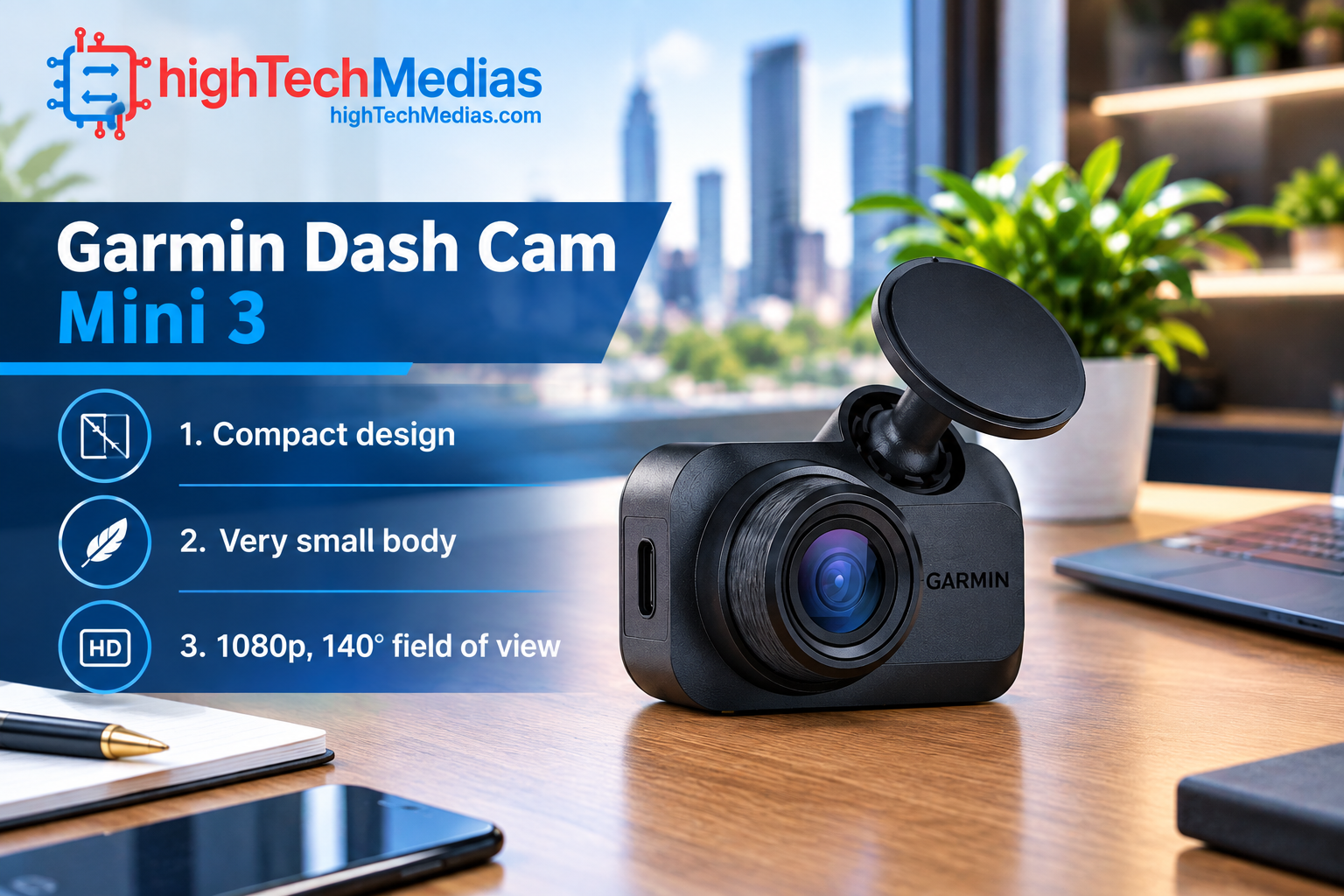
Best Dash Cams in 2026: Top Picks for Safety, Security & Features
A good dash camera can do much more than record your daily commute. It can capture accident evidence, provide useful footage after a hit-and-run, monitor a parked vehicle, and give you a clear record of what happened on the road. The challenge is choosing a model that delivers useful video quality without paying for features you may never use.
After comparing current models, specifications, features, configurations, and the needs of different drivers, we found several strong choices for 2026. Our best dash cams 2026 list includes compact cameras for everyday drivers, high-resolution systems for drivers who want more detail, and connected models aimed at vehicle security.
This guide focuses on the features that matter most in real-world use: video quality, night recording, field of view, parking protection, GPS, storage, smartphone connectivity, installation, and overall value.
Important: This is a research-based comparison rather than a claim that every model was independently tested by HighTechMedias. Product specifications were checked against current manufacturer information and compared with the needs of different types of drivers.
1. Best Dash Cams in 2026: Our Top Picks
The right camera depends heavily on how you drive and what you expect it to do. A commuter may want a small, discreet camera, while a rideshare driver may benefit from cabin recording. Someone worried about vehicle security may place more importance on parking surveillance and cloud connectivity.
Model |
Best for |
Main strengths |
Video setup |
| VIOFO A329S 2CH | Overall video quality | 4K/60fps front, 2K rear, Wi-Fi 6, GPS, parking recording | Front + rear |
| Nextbase iQ | Smart connected features | AI-powered sensing, 3-camera coverage, connected security | Front + cabin + rear |
| Garmin Dash Cam Mini 3 | Compact design | Very small body, 1080p, 140° field of view | Front |
| 70mai Dash Cam 4K Omni | Wide-area coverage | 360° rotating view, 4K recording, AI motion detection | Rotating 360° |
| Vantrue N4 Pro | Multi-camera coverage | Front, cabin and rear recording | 3-channel |
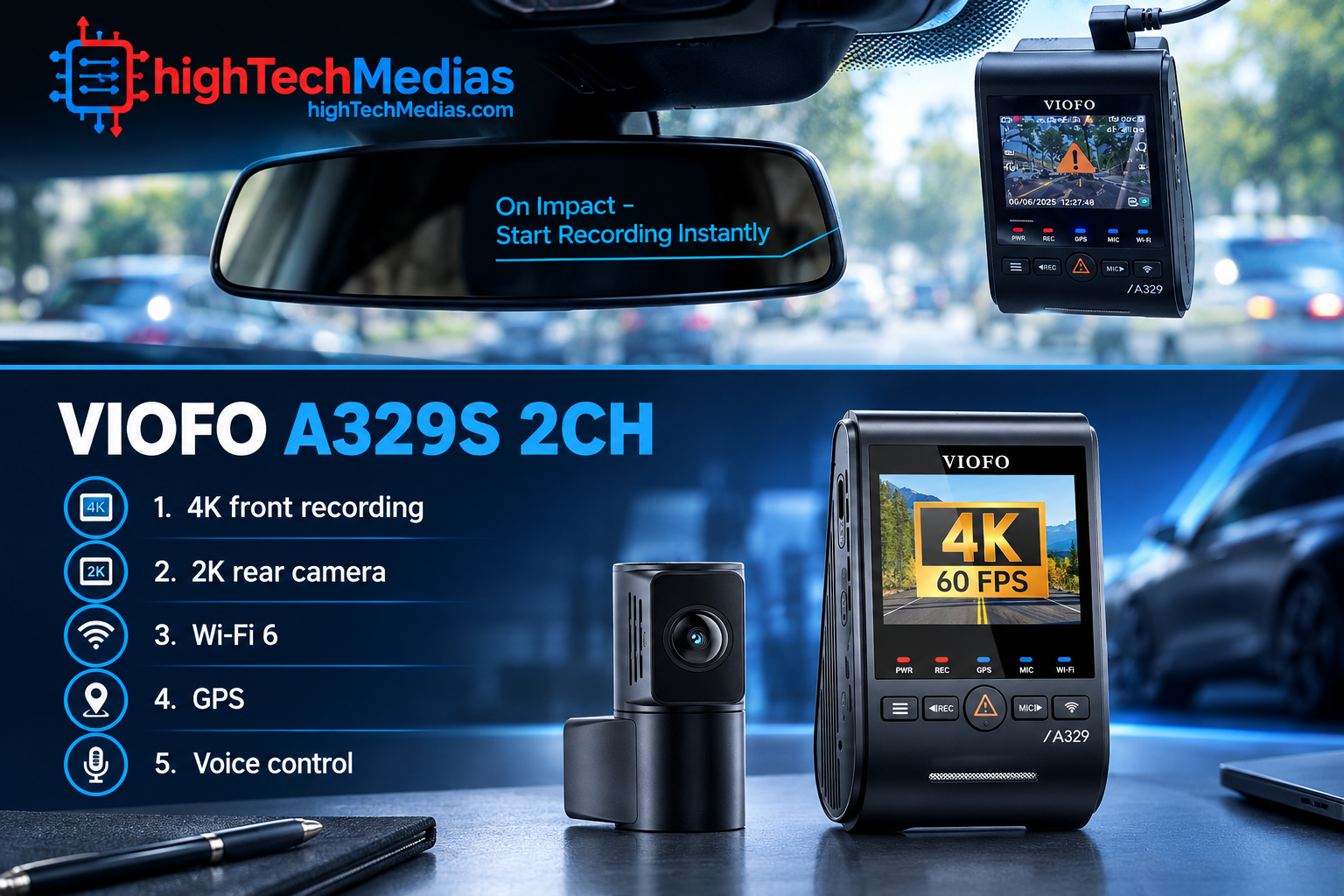
The VIOFO A329S stands out for drivers who prioritize detailed video and modern connectivity. VIOFO currently lists the A329S 2CH with 4K/60fps front recording, 2K rear recording, HDR, Wi-Fi 6, GPS, voice control and hybrid parking recording.
The Nextbase iQ takes a different approach by combining three cameras with connected and AI-powered features. Its official product information lists up to 4K front video plus 1440p cabin and rear cameras.
2. VIOFO A329S 2CH — Best for 4K Video Quality
For drivers who care most about detailed road footage, the VIOFO A329S 2CH is one of the most interesting high-end options in the current market.
The system combines a 4K front camera with a 2K rear camera. VIOFO also lists Sony STARVIS 2 sensors, HDR, Wi-Fi 6, GPS, voice control and hybrid parking recording among its features.
The 4K front camera is particularly useful when you want more detail from the road scene. Higher resolution does not automatically guarantee perfect license-plate capture, because results also depend on lighting, shutter speed, motion, lens quality and distance. Still, a high-quality 4K sensor gives the camera more image information to work with.
The A329S also supports external SSD storage, which can be useful for drivers who record frequently or want to retain more footage. VIOFO says its A329 platform supports external SSD storage and Wi-Fi 6 for faster video transfers.
Pros
- 4K front recording
- 2K rear camera
- Sony STARVIS 2 sensors
- HDR support
- Wi-Fi 6
- GPS
- Voice control
- Hybrid parking recording
- External SSD support
Cons
- More expensive than basic dash cameras
- Installation is more involved than with a simple front camera
- Some advanced parking features require appropriate power installation
- More features mean a steeper learning curve
Best for
Drivers who want high-resolution footage and a dual dash cam setup without moving into a much larger multi-camera system.
3. Nextbase iQ — Best for Smart Connected Features
The Nextbase iQ is designed for drivers who want more than traditional video recording.
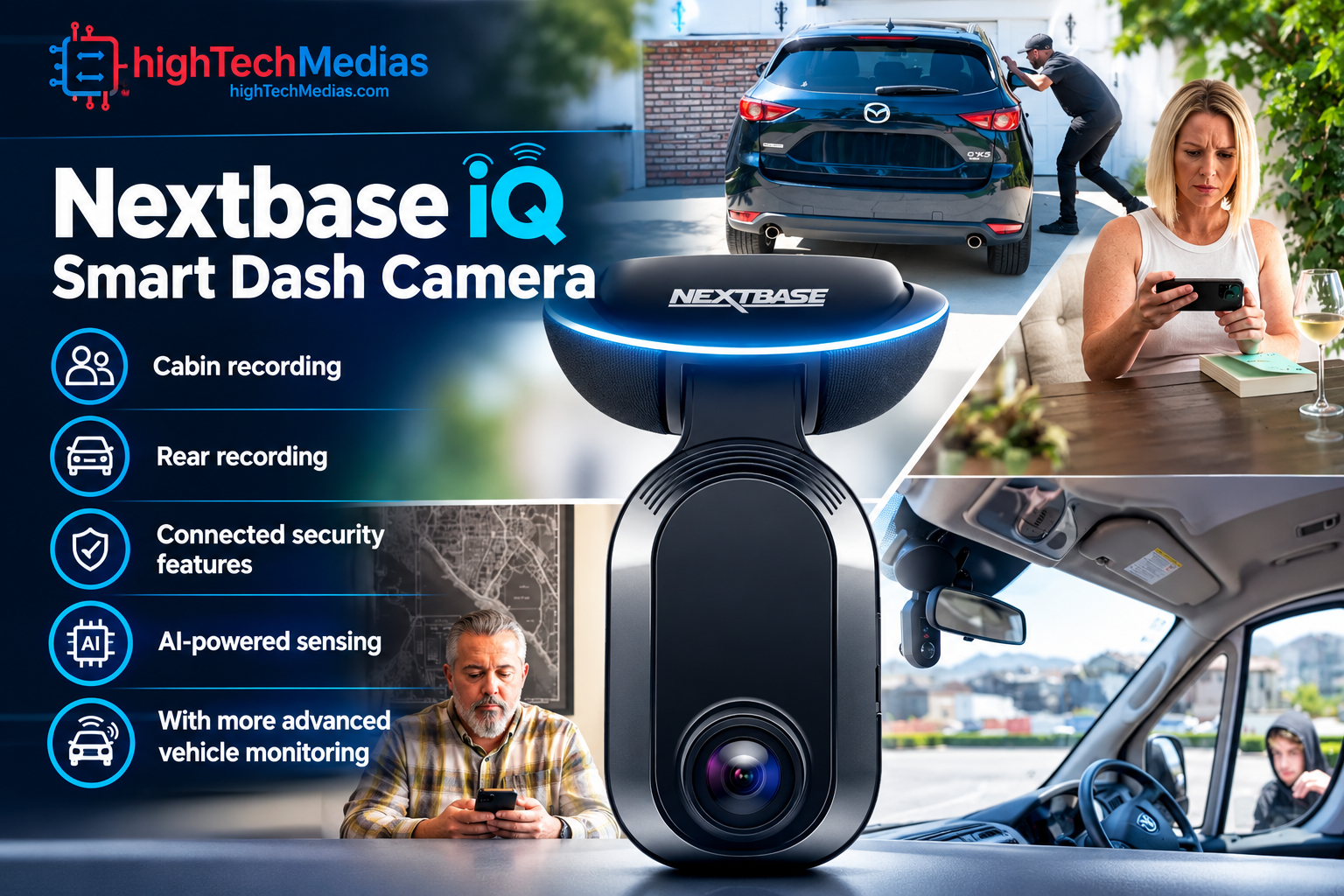
Instead of functioning only as a basic windshield camera, the iQ combines front, cabin and rear cameras with connected safety and security features. Nextbase says the system can capture up to 4K front video along with 1440p cabin and rear footage.
That three-camera approach makes the iQ particularly interesting for drivers who want broader coverage around the vehicle.
The system can also make sense for people who prioritize connected features, remote monitoring and vehicle security over having the smallest possible camera.
For rideshare drivers, the cabin camera can also be relevant. However, drivers should always consider local laws and privacy requirements before recording passengers or sharing recorded footage.
Pros
- Three-camera coverage
- Up to 4K front recording
- Cabin recording
- Rear recording
- Connected security features
- AI-powered sensing
- Designed for more advanced vehicle monitoring
Cons
- More expensive than basic cameras
- More complicated than a simple front-facing dash camera
- Connected features may require additional services
- Privacy considerations are more important with cabin recording
Best for
Drivers who want a car security camera with broader coverage and connected features.
4. Garmin Dash Cam Mini 3 — Best Compact Dash Camera
If you want a camera that takes up very little space behind the windshield, the Garmin Dash Cam Mini 3 deserves attention.
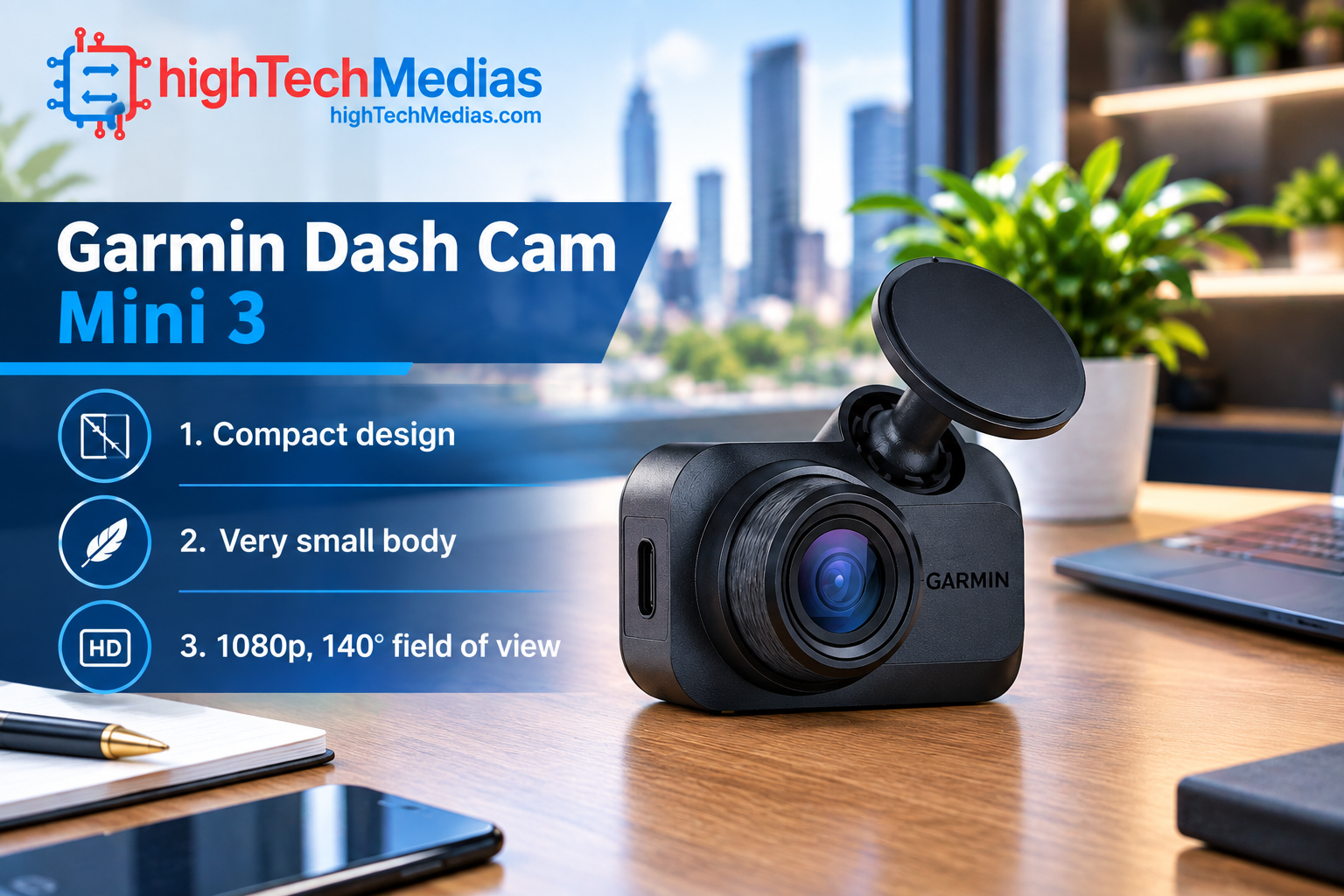
Garmin describes it as an ultra-compact 1080p dash camera with a 140-degree field of view and a built-in polarizer designed to reduce windshield glare.
Its biggest advantage is simplicity. Not every driver needs a large display or a complicated multi-camera system. A small camera can be easier to position discreetly and less distracting while driving.
Garmin also supports smartphone connectivity through its ecosystem, while the company’s documentation describes Wi-Fi, cloud storage options and voice control for compatible functionality.
The trade-off is resolution. If maximum image detail is your priority, there are stronger 4K options. The Mini 3 is more about compactness and convenience.
Pros
- Very compact
- 1080p recording
- 140-degree field of view
- Polarizer helps reduce windshield glare
- Discreet installation
- Smartphone connectivity
Cons
- Not a 4K dash camera
- Less detailed than premium 4K models
- Some connected features may require subscriptions or additional accessories
Best for
Drivers who want a wireless dash cam-style experience with a compact design and minimal visual distraction.
5. 70mai Dash Cam 4K Omni — Best for 360-Degree Coverage
The 70mai Dash Cam 4K Omni takes a different approach to vehicle coverage.
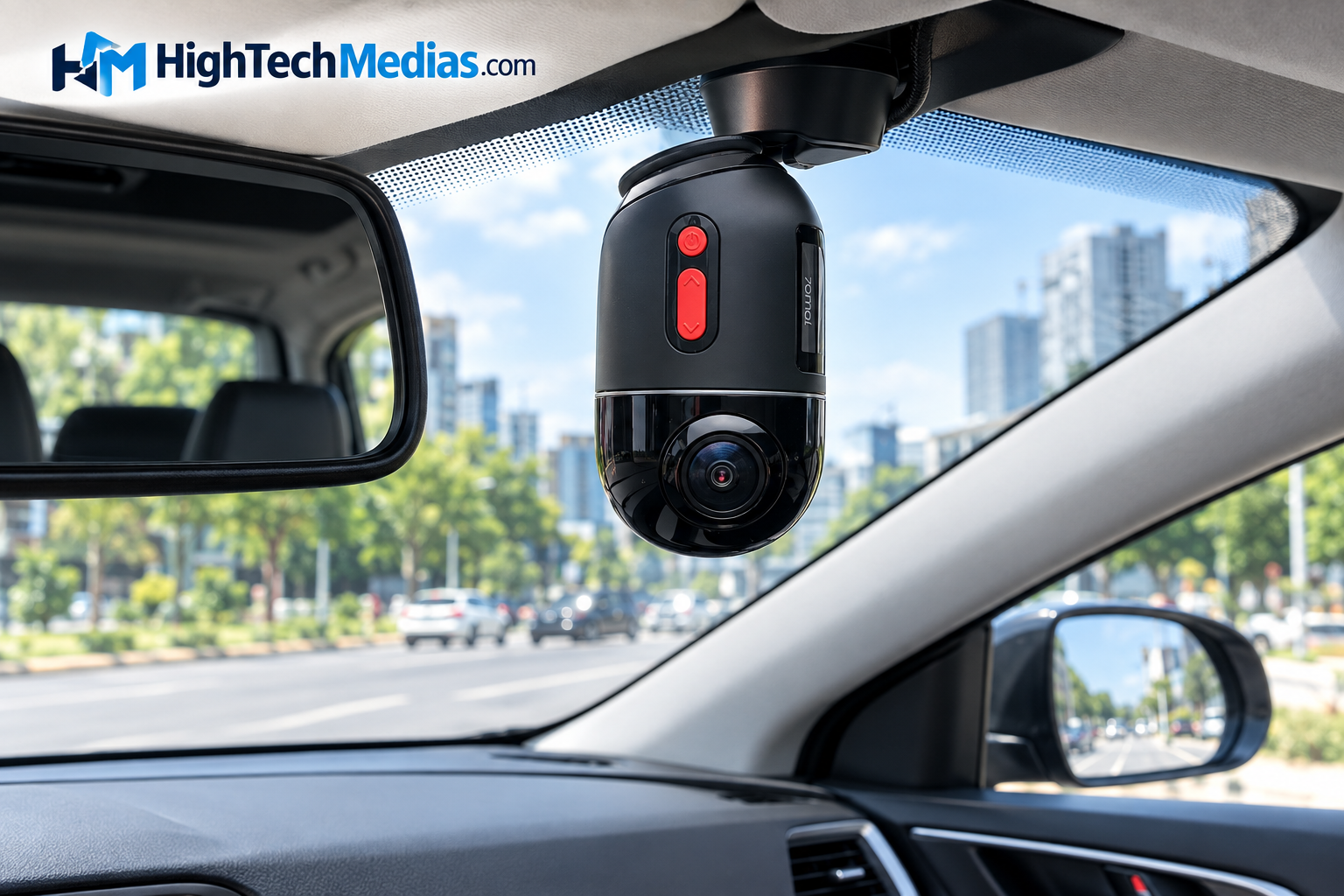
Instead of relying on a fixed forward-facing camera, it uses a rotating design intended to provide a 360-degree view. 70mai lists a Sony IMX678 sensor, 4K recording and AI motion detection for the current Omni model.
That design can be useful for drivers who want more than traditional forward-facing coverage, especially when thinking about parking surveillance.
The important thing is to understand that a 360-degree system is not automatically better for every driver. Traditional dual-camera systems can provide dedicated front and rear views, while a rotating camera takes a different approach.
Pros
- 360-degree rotating view
- 4K recording
- Sony STARVIS 2 sensor
- AI motion detection
- Broad coverage
- Useful concept for parking surveillance
Cons
- Different installation and positioning considerations
- More expensive than basic dash cams
- Rotating-camera design may not suit every vehicle
- Feature set can be more complicated
Best for
Drivers who prioritize broad vehicle coverage and parking surveillance.
6. Vantrue N4 Pro — Best for Three-Channel Recording
For drivers who want front, cabin and rear recording, the Vantrue N4 Pro is another model worth considering.
Vantrue’s current product documentation lists the N4 Pro among its N-series products.
Three-channel cameras can be useful for drivers who want broader coverage. They are particularly relevant for rideshare drivers, families, and anyone who wants the cabin recorded alongside the road.
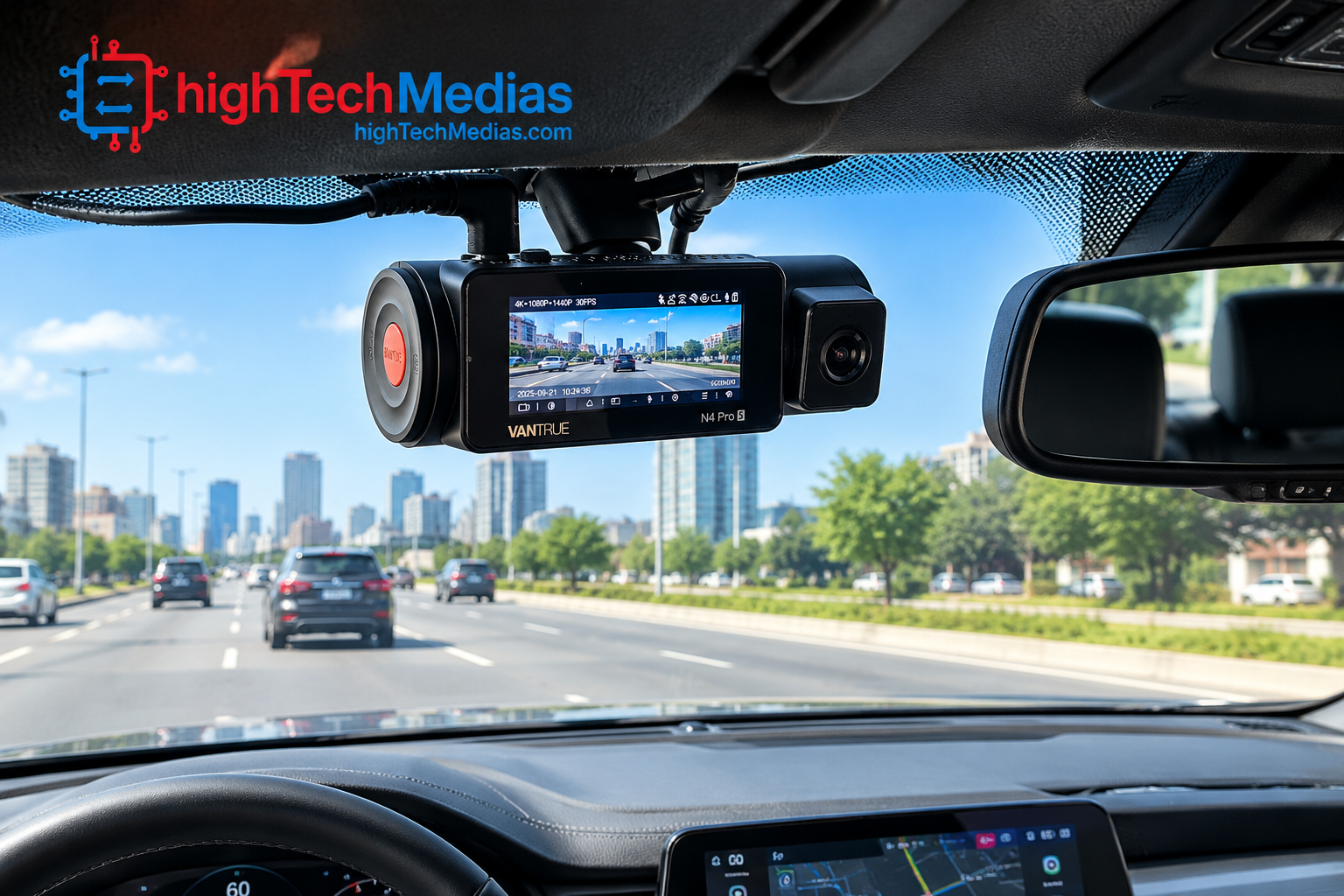
The trade-off is installation complexity. More cameras generally mean more wiring, more storage requirements and more decisions about how footage is organized.
A three-channel system can also be useful as a rideshare dash cam, although privacy and recording laws vary by location.
Pros
- Front, cabin and rear coverage
- Useful for rideshare applications
- Broad recording coverage
- More complete evidence in some incidents
Cons
- More installation work
- More storage requirements
- Cabin recording raises additional privacy considerations
- More expensive than basic single-camera models
Best for
Rideshare drivers, families and drivers who want three-channel coverage.
7. What Makes a Good Dash Camera?
The best dash camera is not necessarily the one with the longest specification sheet. Several features matter much more than others.
Video resolution
1080p remains usable for basic recording, but 2K and 4K cameras can capture considerably more detail.
A 4K dash cam can be especially useful when you need to inspect a recorded scene later. However, resolution should not be considered in isolation. Sensor quality, lens design, HDR performance, exposure control and frame rate all affect the final footage.
Night vision
Night recording is one of the most important areas to examine.
A camera may produce excellent daytime video but struggle after sunset. Look for evidence of low-light performance rather than assuming that a marketing label such as “night vision” guarantees excellent footage.
HDR and WDR
HDR can help a camera deal with scenes containing both bright and dark areas.
This matters when a vehicle moves from a shaded road into strong sunlight or when headlights appear in a darker scene.
WDR is another term used in dash camera specifications. The exact implementation varies by manufacturer, so sample footage is more useful than the label alone.
Field of view
A wide-angle lens can capture more of the road and surrounding area, but extremely wide coverage can introduce distortion.
For most drivers, the goal is a practical balance between road coverage and image clarity.
G-sensor
A G-sensor detects sudden changes in movement. When an impact is detected, the camera can protect the relevant file from normal loop recording.
This can be useful after a collision because ordinary loop recording continuously overwrites older files when storage becomes full.
GPS
A dash cam with GPS can record location and speed information alongside video, depending on the model and settings.
GPS can make recorded footage more informative, particularly when reviewing where an incident occurred.
Parking mode
A dash cam with parking mode can monitor the vehicle while it is parked, but the implementation varies considerably.
Some cameras respond to impacts. Others can record motion or use buffered recording. Many require a hardwire kit or another constant-power solution.
Garmin, for example, offers a constant-power option for compatible cameras that connects through the vehicle’s OBD-II port, while other systems use dedicated hardwire kits.
8. How We Compared These Dash Cameras
For this guide, we focused on the factors that have the greatest practical effect on buying decisions:
Video quality: Resolution, frame rate, sensor technology and HDR capability.
Coverage: Front-only, front-and-rear, cabin coverage and wider systems.
Night performance: How well the camera is designed to handle low-light scenes.
Parking protection: Whether the camera supports impact detection, motion detection, buffered recording or other parking features.
Connectivity: Wi-Fi, smartphone applications, GPS, cloud storage and voice control.
Installation: Power requirements, camera placement and wiring complexity.
Storage: microSD requirements, cloud options and external storage support where available.
Use case: Everyday commuting, rideshare driving, vehicle security, fleet use and long-distance travel.
This approach is more useful than simply comparing megapixels or resolution numbers.
9. Do You Really Need a 4K Dash Cam?
Not necessarily.
A 4K camera makes the most sense for drivers who place a high value on image detail and want a premium recording system.
For a basic commuter, 1080p can still be perfectly adequate.
A 2K camera may be a useful middle ground.
The bigger mistake is choosing a camera based only on the number “4K.” A poorly optimized 4K camera can still produce disappointing nighttime footage.
If your priority is accident evidence, look at the entire imaging system rather than resolution alone.
10. Do Dash Cams Help With Insurance Claims?
A dash camera can provide useful video evidence after an accident, but you should not assume that owning one automatically means an insurer will reduce your premium.
The practical benefit is documentation.
Footage may help establish:
- What happened immediately before a collision
- The direction of travel
- Traffic-light or road conditions
- Another vehicle’s movement
- A hit-and-run incident
- Events occurring around a parked vehicle
Whether footage is accepted, how it is evaluated and whether it affects an insurance claim depends on the insurer and circumstances.
For that reason, a dash cam should be viewed primarily as an evidence and safety tool rather than an automatic insurance discount.
11. What About Rideshare and Fleet Dash Cams?
A rideshare dash cam has different requirements from a normal commuter camera.
A rideshare driver may want:
- Front road recording
- Cabin recording
- Rear recording
- Good night performance
- Easy file access
- Strong storage capacity
- Privacy controls
Fleet operators have additional requirements.
A fleet dash cam may need GPS tracking, centralized management, cloud access and driver-safety features.
In both cases, recording people inside a vehicle creates additional privacy considerations. Check the laws and platform requirements that apply where the vehicle operates.
12. Do You Need Cloud Storage?
Cloud storage is convenient, but it is not essential for every driver.
A traditional camera can store footage locally on a microSD card. That approach is simple and does not depend on a cellular connection.
Cloud-connected cameras can be more useful when you want remote access, alerts or off-device storage.
The downside is that connected features can introduce subscriptions and additional operating costs.
For a basic driver, local storage may be enough.
For someone prioritizing car security, remote connectivity may justify the additional cost.
13. Dash Cam Installation: What to Consider
Installation is often overlooked when comparing cameras.
Before buying, check:
- Where the camera should be mounted.
- How the power cable will be routed.
- Whether a rear camera requires a long cable.
- Whether parking mode requires constant power.
- Whether the vehicle’s windshield has special coatings or sensors.
- Whether the camera blocks the driver’s view.
- Whether local regulations affect placement.
The camera should not become a distraction.
A clean installation also makes the system easier to live with every day.
14. Important Dash Cam Features to Understand
Loop recording
The camera continuously records short clips and replaces older unprotected files when storage becomes full.
G-sensor
Detects sudden movement or impact and can protect footage from being overwritten.
Supercapacitor
Some cameras use supercapacitors rather than conventional batteries to help handle heat and power-loss conditions.
Wi-Fi
Wi-Fi can allow a smartphone to connect directly to the camera so you can review or transfer footage.
Voice control
Voice control can be useful when you want to save footage without reaching toward the camera.
HDR
High Dynamic Range can help balance bright and dark parts of a scene.
WDR
Wide Dynamic Range is another method used to improve visibility across different lighting conditions.
ADAS and collision detection
Some premium cameras include driver-assistance alerts such as forward-collision or lane-departure warnings.
These features should be treated as supplementary technology, not as a replacement for attentive driving.
15. What About Garmin, Nextbase, VIOFO, Vantrue, BlackVue and Thinkware?
Several established brands deserve consideration when shopping for a dash camera.
Garmin is known for compact cameras and a broad connected ecosystem.
Nextbase focuses heavily on connected dash-camera technology, with the iQ representing its more advanced smart-camera approach.
VIOFO has a particularly broad range of multi-channel and high-resolution cameras. Its current lineup includes 1-, 2- and 3-channel configurations and several 4K models.
Vantrue offers several multi-channel systems, including front, cabin and rear configurations.
BlackVue and Thinkware are also important brands to consider when looking at premium connected and parking-focused systems.
70mai has expanded its lineup around 4K recording, AI motion detection and wide-area coverage.
Rexing is another established name in the consumer dash-camera market.
Rove R2-4K is worth considering for shoppers specifically interested in affordable 4K recording.
Rather than choosing a brand simply because it is familiar, compare the actual camera configuration, image quality, installation requirements and software experience.
16. Are Dual Dash Cams Worth It?
For many drivers, yes.
A front-only camera records what happens ahead of the vehicle. A dual dash cam adds a rear camera, giving you another perspective.
That can be useful in rear-end collisions, parking incidents and situations where events happen behind the vehicle.
The downside is installation complexity and additional storage requirements.
If your vehicle is frequently driven in busy traffic, the additional coverage can be more valuable than simply upgrading from one resolution level to another.
17. Which Dash Cam Should You Buy?
There is no single camera that makes sense for every driver.
Choose the VIOFO A329S 2CH if your priority is high-resolution front and rear recording and advanced connectivity.
Choose the Nextbase iQ if connected security and three-camera coverage are more important to you.
Choose the Garmin Dash Cam Mini 3 if you want a compact, discreet camera.
Choose the 70mai 4K Omni if broad rotating coverage is your priority.
Choose the Vantrue N4 Pro if you specifically need front, cabin and rear recording.
The right choice depends on your vehicle, budget, driving habits and the type of evidence you want the camera to capture.
18. Frequently Asked Questions About Dash Cameras
What is the best dash cam in 2026?
The best dash cam depends on your priorities. A premium 4K front-and-rear system may be ideal for image quality, while a compact 1080p model may be better for drivers who want a discreet installation.
Are 4K dash cams worth it?
A 4K dash camera can provide more detail than 1080p, but resolution is only one part of image quality. Sensor performance, lens quality, HDR, exposure and nighttime performance also matter.
Do I need a dash cam with parking mode?
Parking mode is useful if you want the camera to monitor your vehicle while it is parked. However, many parking modes require a hardwire kit or another constant-power solution.
Is a dual dash cam better than a front-only camera?
A dual dash cam provides additional rear coverage, which can be valuable in collisions and parking incidents. A front-only camera is simpler and usually less expensive.
Do dash cams record when the car is off?
Some models can record while parked if parking mode is supported and the camera receives constant power.
Do dash cams have GPS?
Many modern models include GPS. A dash cam with GPS can associate location and speed information with recorded footage.
Are wireless dash cams completely cable-free?
Usually not. “Wireless” often refers to Wi-Fi connectivity between the camera and smartphone. The camera generally still needs power.
Can a dash cam provide insurance proof?
Recorded footage can provide evidence that may be useful during an insurance claim, but acceptance depends on the insurer and circumstances.
What is the best dash cam for safety?
For safety-focused drivers, look for strong video quality, reliable incident recording, good nighttime performance, GPS, parking protection and an installation that does not obstruct visibility.
19. Final Verdict
The market has moved well beyond simple windshield cameras. Today’s best dash cams 2026 options range from tiny cameras designed to disappear behind the rear-view mirror to sophisticated systems with 4K recording, multiple cameras, Wi-Fi, GPS, cloud services, AI features and parking surveillance.
For drivers focused on high-quality front and rear video, the VIOFO A329S 2CH is a compelling premium choice. The Nextbase iQ is more interesting for drivers who want connected security and three-camera coverage, while Garmin’s Mini 3 makes more sense for shoppers who prioritize a compact installation. The 70mai 4K Omni offers a different approach with its rotating 360-degree view, and the Vantrue N4 Pro is a strong option for drivers who specifically need three-channel recording.
Before buying, don’t focus only on 4K resolution. Look at nighttime video quality, sensor technology, field of view, parking mode, GPS, storage, power requirements and smartphone connectivity.
Most importantly, choose a camera that fits how you actually drive. A simple, reliable dash camera that records clear footage every day can be more useful than a premium model loaded with features you never use.
For more technology buying guides and product comparisons, continue exploring the Automotive Tech section at HighTechMedias.com.




Leave a Reply