
Smartphone Camera Test – Which Phone Takes the Best Photos?
Introduction
Choosing a phone based on camera specifications alone can be misleading. A 200MP sensor does not automatically guarantee better photos, just as a 48MP camera does not tell the entire story. Sensor size, lens design, aperture, stabilization, image processing, zoom hardware, software, and video capabilities all influence the final result.
This smartphone camera test compares two of the most advanced camera phones available to U.S. buyers in 2026: the iPhone 18 Pro Max and Samsung Galaxy S26 Ultra. Both offer sophisticated multi-camera systems, high-resolution sensors, advanced computational photography, and extensive video features, but they approach mobile photography differently.
The iPhone 18 Pro Max starts at $1,299 in the U.S., while Samsung lists the Galaxy S26 Ultra from $1,299.99 before trade-in. Samsung’s U.S. store is currently showing a promotional $1,099.99 price for the 256GB unlocked model, so buyers should verify the current price before purchasing.
This comparison focuses on verified specifications and officially documented camera capabilities rather than inventing laboratory scores or claiming photographs were captured under conditions that were not independently tested.
1. iPhone 18 Pro Max vs. Samsung Galaxy S26 Ultra: The Two Cameras in This Comparison
The two phones selected for this comparison represent different approaches to flagship smartphone cameras.
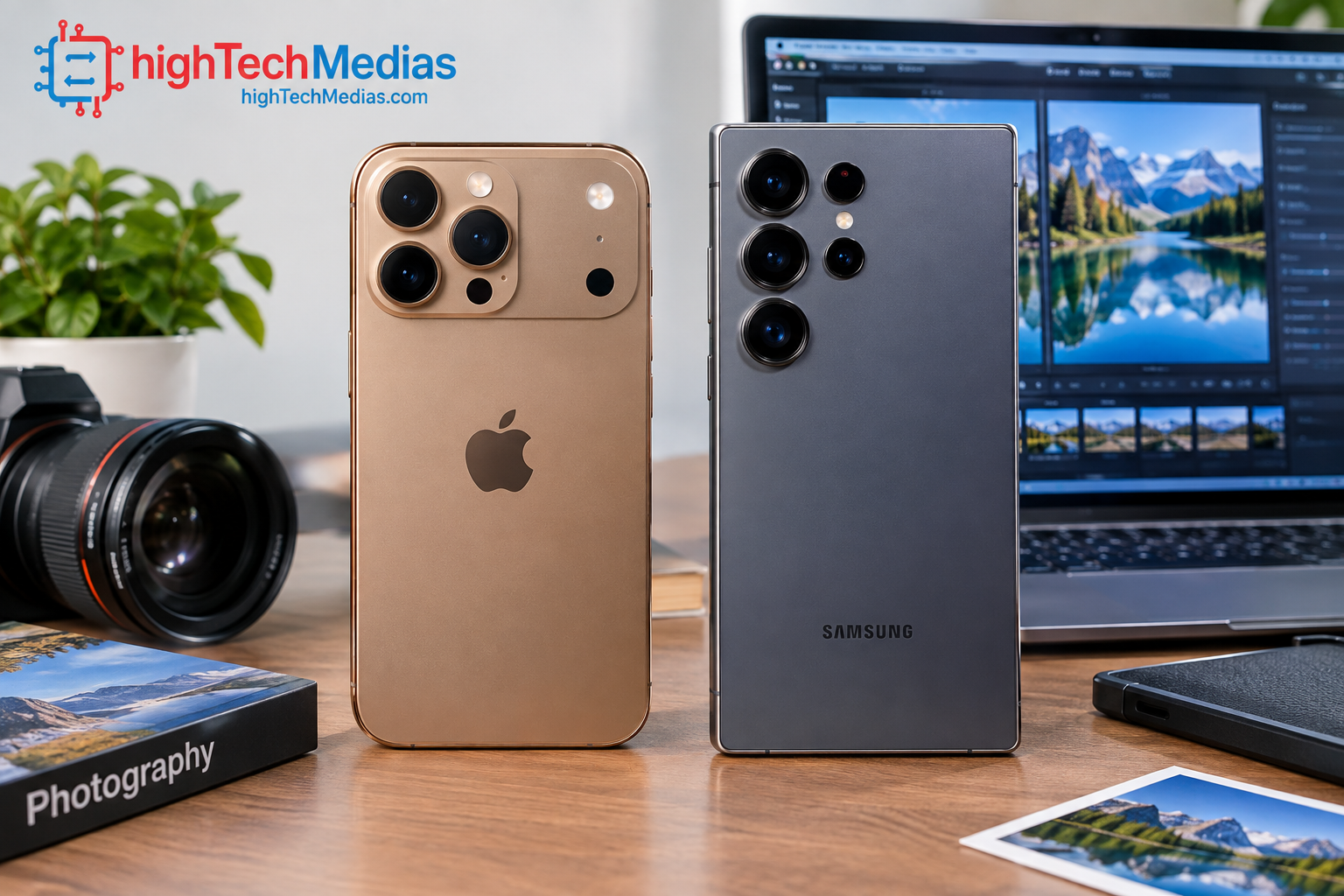
The iPhone 18 Pro Max is Apple’s current top-end iPhone camera model. Apple lists a 48MP Pro Fusion camera system consisting of a 48MP Fusion Main camera with variable aperture, a 48MP Fusion Ultra Wide camera, and a 48MP Fusion Telephoto camera. Apple also lists up to 8x optical-quality zoom, Pro controls, ProRAW, and extensive professional video recording capabilities.
The Samsung Galaxy S26 Ultra uses a four-camera rear system: a 200MP wide camera, 50MP ultra-wide camera, 50MP telephoto camera with 5x optical zoom, and 10MP telephoto camera with 3x optical zoom. Samsung also specifies 2x and 10x optical-quality zoom and up to 100x digital zoom.
iPhone 18 Pro Max
U.S. starting price: $1,299 for 256GB, according to Apple’s September 2026 announcement.
Who should buy this?
- iPhone users who prioritize photography and video
- Content creators
- Social media creators
- Professional video users
- Users who want advanced manual camera controls
- Buyers already invested in the Apple ecosystem
- Users who want ProRAW and ProRes RAW workflows
Main camera specifications
- 48MP Fusion Main camera
- Variable aperture: ƒ/1.48, ƒ/1.8, ƒ/2.8, and ƒ/4.0
- 48MP Fusion Ultra Wide camera
- 48MP Fusion Telephoto camera
- 4x telephoto at 100mm
- Up to 8x optical-quality telephoto at 200mm
- Second-generation sensor-shift optical image stabilization on the Main camera
- 3D sensor-shift stabilization and autofocus on the Telephoto
- 18MP Center Stage front camera
- ProRAW
- ProRes RAW
- Apple Log 2
- 4K Dolby Vision recording up to 120 fps using the Fusion Main camera
Why consider the iPhone 18 Pro Max?
The biggest change is the variable aperture on the 48MP Main camera. Rather than using one fixed aperture, the camera can automatically adjust the aperture according to lighting and depth-of-field requirements. Apple says this can improve low-light photography and provide greater creative control.
The iPhone also places significant emphasis on video. ProRes RAW, Apple Log 2, genlock, 4K Dolby Vision, advanced stabilization, and manual camera controls make the phone particularly interesting for creators who want to integrate smartphone footage into more demanding workflows.
Pros
- 48MP resolution across all three rear cameras
- Variable aperture on the Main camera
- Strong professional video feature set
- ProRAW and ProRes RAW
- Manual exposure, shutter-speed, white-balance, and histogram controls
- 8x optical-quality telephoto reach
- 18MP Center Stage front camera
Cons
- High starting price
- Large 249g Pro Max design
- Some professional features are more useful to experienced creators than casual photographers
- Maximum digital zoom is lower on paper than Samsung’s 100x figure.
Samsung Galaxy S26 Ultra
U.S. starting price: $1,299.99 before trade-in. Samsung’s U.S. store currently lists the 256GB unlocked model at $1,099.99 in a promotional offer, but pricing and promotions can change.
Who should buy this?
- Android users who want an advanced camera system
- Travelers
- Street photographers
- Users who frequently photograph distant subjects
- People who want dedicated 3x and 5x telephoto cameras
- Users who want extensive zoom flexibility
- Buyers who prefer Samsung’s editing and AI photography tools
Main camera specifications
- 200MP wide camera, ƒ/1.4
- 50MP ultra-wide camera, ƒ/1.9
- 50MP telephoto camera, ƒ/2.9
- 10MP telephoto camera, ƒ/2.4
- 3x optical zoom
- 5x optical zoom
- 2x and 10x optical-quality zoom
- Up to 100x digital zoom
- 12MP front camera
- Optical image stabilization
- 8K video recording at 30 fps
- 4K video recording up to 120 fps in Pro Video mode
Why consider the Galaxy S26 Ultra?
Samsung takes a particularly hardware-heavy approach to zoom photography. Instead of relying primarily on digital processing to create reach, the S26 Ultra has separate 3x and 5x telephoto cameras. That gives photographers dedicated focal-length options for portraits, travel, events, sports, and distant subjects.
The 200MP Main camera also provides a very high-resolution capture mode, while Samsung’s ProVisual Engine and wider apertures are designed to improve detail and brightness in challenging lighting. Samsung says the S26 Ultra’s 200MP Main camera has an ƒ/1.4 aperture and its 50MP 5x telephoto has an ƒ/2.9 aperture.
Pros
- 200MP Main camera
- Dedicated 3x and 5x telephoto cameras
- 50MP ultra-wide camera
- 100x digital zoom
- 8K video
- Strong zoom flexibility
- 5,000mAh battery
- Extensive Samsung camera and AI editing features
Cons
- 214g weight
- Camera system can be more complex for casual users
- 100x digital zoom should not be confused with 100x optical zoom
- Some AI-assisted editing features can alter the original appearance of an image.
2. Camera Hardware: More Megapixels Do Not Automatically Mean Better Photos
One of the most common mistakes in smartphone shopping is assuming that the camera with the largest megapixel number must produce the best photograph.
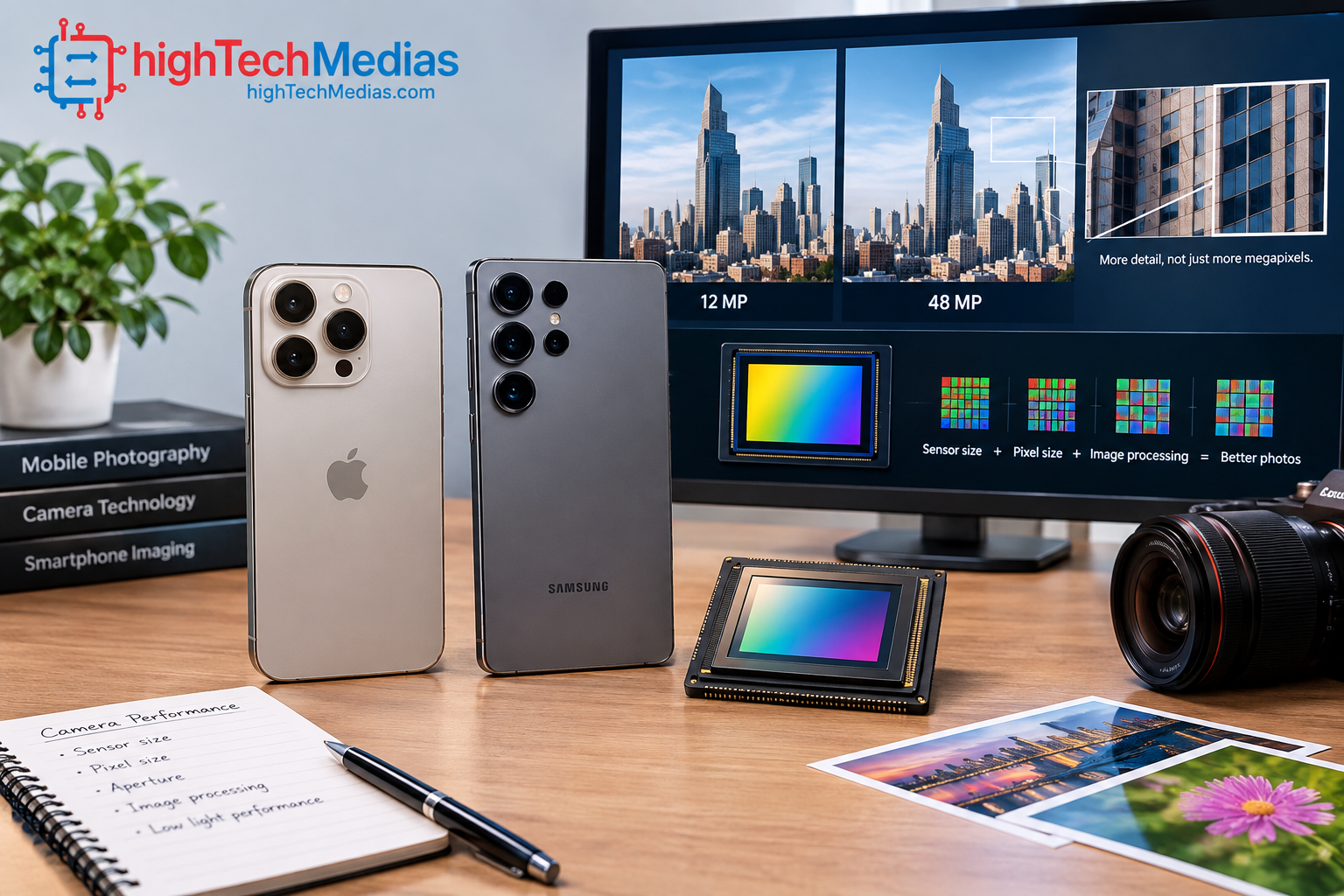
The Galaxy S26 Ultra’s 200MP Main camera and the iPhone 18 Pro Max’s 48MP Main camera demonstrate why megapixel counts need context.
A camera’s final image depends on much more than resolution. The camera sensor, lens, aperture, stabilization, image-processing system, exposure, focus, and shooting conditions all matter.
Samsung’s 200MP sensor gives the S26 Ultra an obvious resolution advantage on the specification sheet. However, Apple’s 48MP Main camera uses a variable aperture and supports 24MP and 48MP high-resolution photography.
For everyday photography, the more useful question is therefore not:
Which phone has more megapixels?
Instead, ask:
Which phone consistently provides the combination of detail, exposure, color, focus, dynamic range, and lens flexibility that matches how I take pictures?
This is one of the most important principles in evaluating phone camera quality.
3. Main Camera Performance and Everyday Photography
For most users, the Main camera is still the most important camera on the phone.
It is the camera you are likely to use for:
- family photos;
- food photography;
- travel pictures;
- pets;
- documents;
- street scenes;
- indoor photography;
- landscapes;
- social media posts.
The iPhone 18 Pro Max uses a 48MP Fusion Main camera with variable aperture and sensor-shift stabilization. Apple’s technical specifications list four aperture settings ranging from ƒ/1.48 to ƒ/4.0.
That variable aperture is particularly significant because aperture influences both how much light reaches the sensor and how depth of field can be controlled.
Samsung’s Galaxy S26 Ultra uses a 200MP Main camera with an ƒ/1.4 aperture. Samsung says the wider aperture allows the Main camera to capture more light and is part of its approach to improved low-light photography.
For buyers, this means both phones offer sophisticated Main cameras, but their approaches differ.
Apple emphasizes variable-aperture flexibility, color and image processing, and professional controls.
Samsung combines a very high-resolution Main sensor with a wide ƒ/1.4 aperture and its ProVisual Engine.
A meaningful real-world smartphone camera test should therefore include daylight, indoor scenes, backlit subjects, moving people, close-up objects, and difficult mixed lighting rather than relying on one outdoor photograph.
4. Ultra-Wide Cameras: Landscapes, Groups and Macro Photography
Ultra-wide cameras become useful when the standard Main camera cannot capture enough of a scene.
They are especially useful for:
- architecture;
- landscapes;
- large groups;
- travel photography;
- interiors;
- dramatic perspective;
- macro photography when supported.
The iPhone 18 Pro Max has a 48MP Fusion Ultra Wide camera with a 13mm equivalent focal length, ƒ/2.2 aperture, and 120-degree field of view. Apple also lists 48MP macro photography.
The Galaxy S26 Ultra has a 50MP ultra-wide camera with an ƒ/1.9 aperture.
On paper, both phones therefore offer unusually high-resolution ultra-wide hardware.
For photographers, however, resolution is only one factor. An ultra-wide image also needs good edge correction, controlled distortion, consistent color, accurate autofocus, and enough dynamic range to keep skies, buildings, and darker areas balanced.
This is where a serious smartphone camera comparison becomes more useful than simply reading the megapixel specifications.
5. Smartphone Camera Test: Zoom and Telephoto Photography
Zoom is one of the biggest differences between these two camera systems.
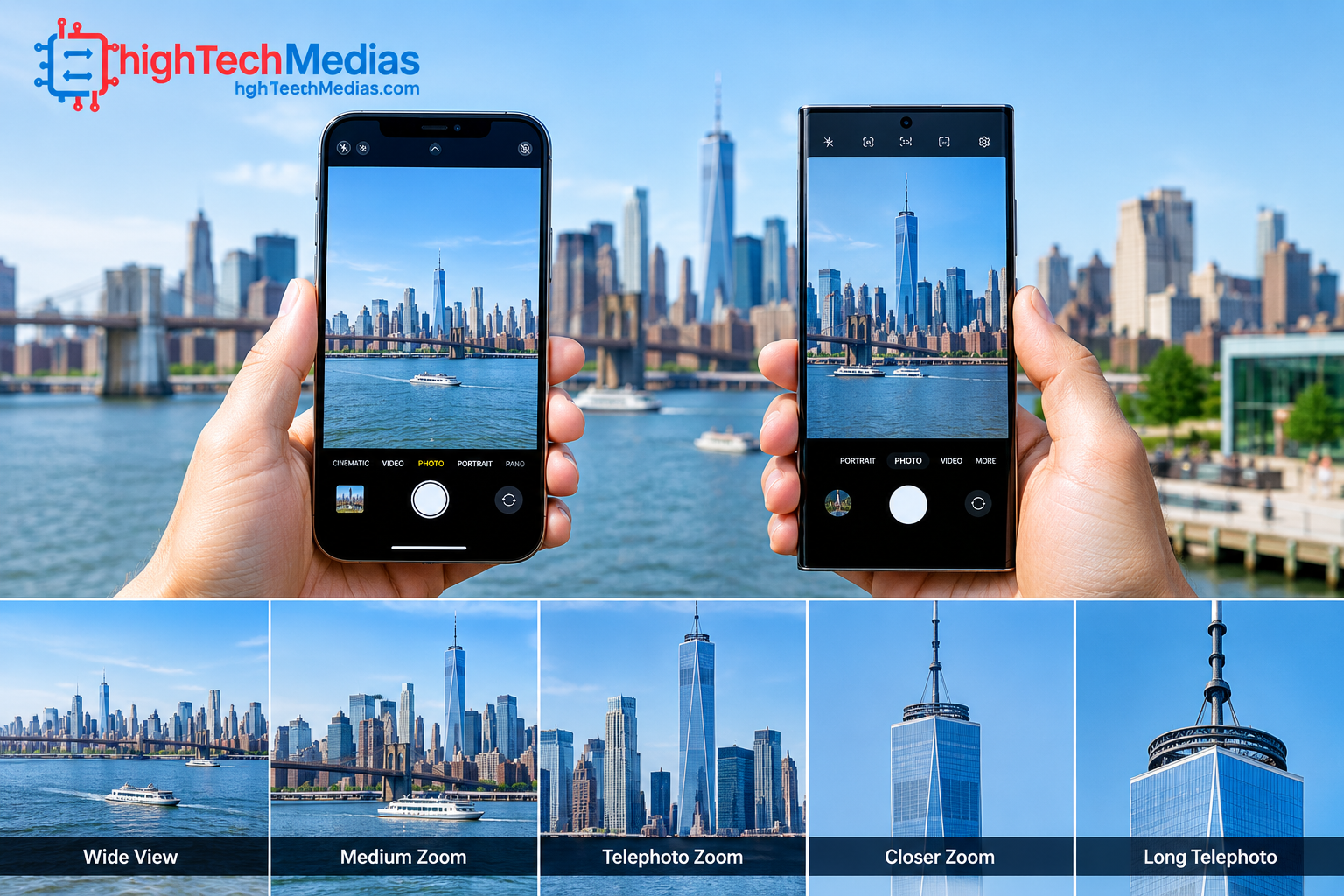
The iPhone 18 Pro Max offers a 48MP Fusion Telephoto camera with a 100mm equivalent 4x focal length and up to 8x optical-quality telephoto reach at 200mm. Apple also lists 2x optical zoom out and a 16x optical-quality zoom range.
Samsung takes a different approach.
The Galaxy S26 Ultra includes separate 3x and 5x telephoto cameras. Samsung specifies 3x and 5x optical zoom, 2x and 10x optical-quality zoom, and up to 100x digital zoom.
This is an important distinction.
Optical zoom uses physical camera optics to achieve magnification.
Digital zoom relies more heavily on cropping and computational processing.
Therefore, a statement such as “100x zoom” should never be interpreted as “100x optical zoom.”
For travelers, wildlife enthusiasts, sports fans, and people who frequently photograph distant subjects, the Galaxy’s dedicated 3x and 5x telephoto cameras provide a particularly flexible hardware configuration.
The iPhone’s 4x and 8x optical-quality telephoto options, however, provide substantial reach and high-resolution capture.
What should buyers look for?
If you frequently photograph:
- concerts;
- sports;
- buildings from a distance;
- wildlife;
- travel details;
- stage performances;
then telephoto hardware deserves more attention than the Main camera’s megapixel number.
6. Low-Light Photography and Night Scenes
Low-light photography is where camera hardware and computational photography have to work together.
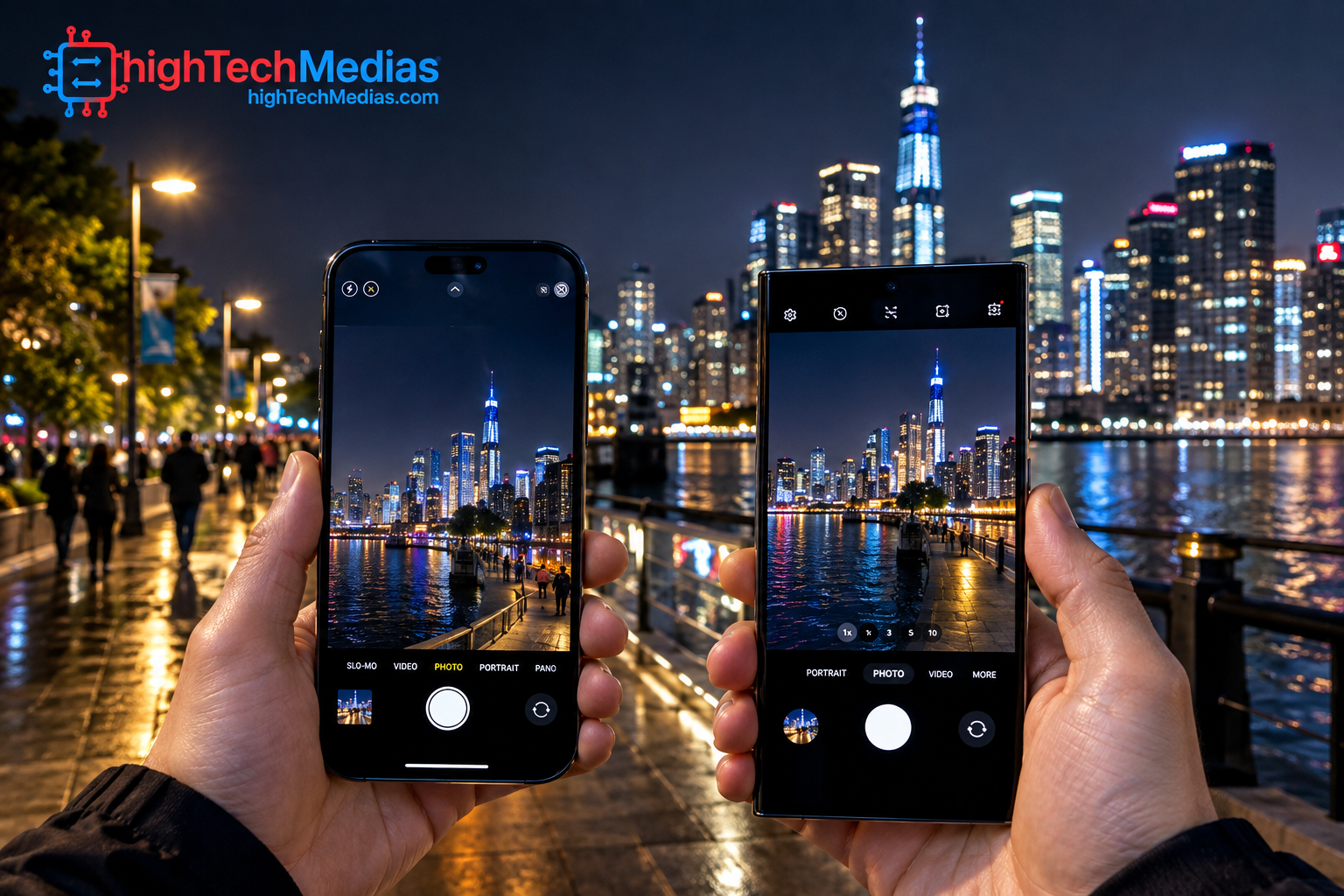
When light levels fall, the camera has to deal with:
- higher image noise;
- slower shutter speeds;
- motion blur;
- reduced color information;
- autofocus challenges;
- difficult exposure decisions.
The iPhone 18 Pro Max’s variable-aperture Main camera is designed to provide additional control over light and depth of field. Apple specifically describes the new system as improving low-light photography and video.
Samsung’s Galaxy S26 Ultra uses a wide ƒ/1.4 Main aperture and ƒ/2.9 aperture on its 5x telephoto camera. Samsung says these wider apertures contribute to brighter low-light photographs and video, with its Nightography system and ProVisual Engine handling image processing.
However, official specifications cannot tell the entire story.
Actual night photography depends on the scene.
A stationary city skyline is easier to photograph than a moving person under a streetlight. A well-lit restaurant is different from a dark concert venue.
For that reason, a meaningful smartphone camera test should include several low-light scenarios instead of using one night photograph as proof of overall performance.
7. Portraits, Skin Tones and Computational Photography
Portrait photography is more complicated than simply creating a blurred background.
A good portrait needs:
- accurate focus;
- natural skin tones;
- convincing subject separation;
- controlled highlights;
- realistic hair and clothing edges;
- appropriate contrast;
- natural-looking background blur.
Both Apple and Samsung use computational photography to enhance images.
The iPhone 18 Pro Max supports next-generation portraits with Focus and Depth Control, Portrait Lighting, Photographic Styles, and smart focus tracking.
Samsung combines its camera hardware with its ProVisual Engine and AI-powered photography and editing features. Samsung also provides Photo Assist tools for editing images, although Samsung notes that AI-edited images may be resized and may contain a visible AI watermark in certain situations.
This creates an important distinction for professional users.
If you want a photograph that remains close to the original capture, you may prefer a workflow that emphasizes conventional camera controls and RAW capture.
If you want rapid editing and social-media-ready results, AI-assisted tools can be extremely convenient.
8. Video: Which Phone Is More Useful for Creators?
Photography is only half of the modern smartphone camera experience.
For creators, video can be equally important.
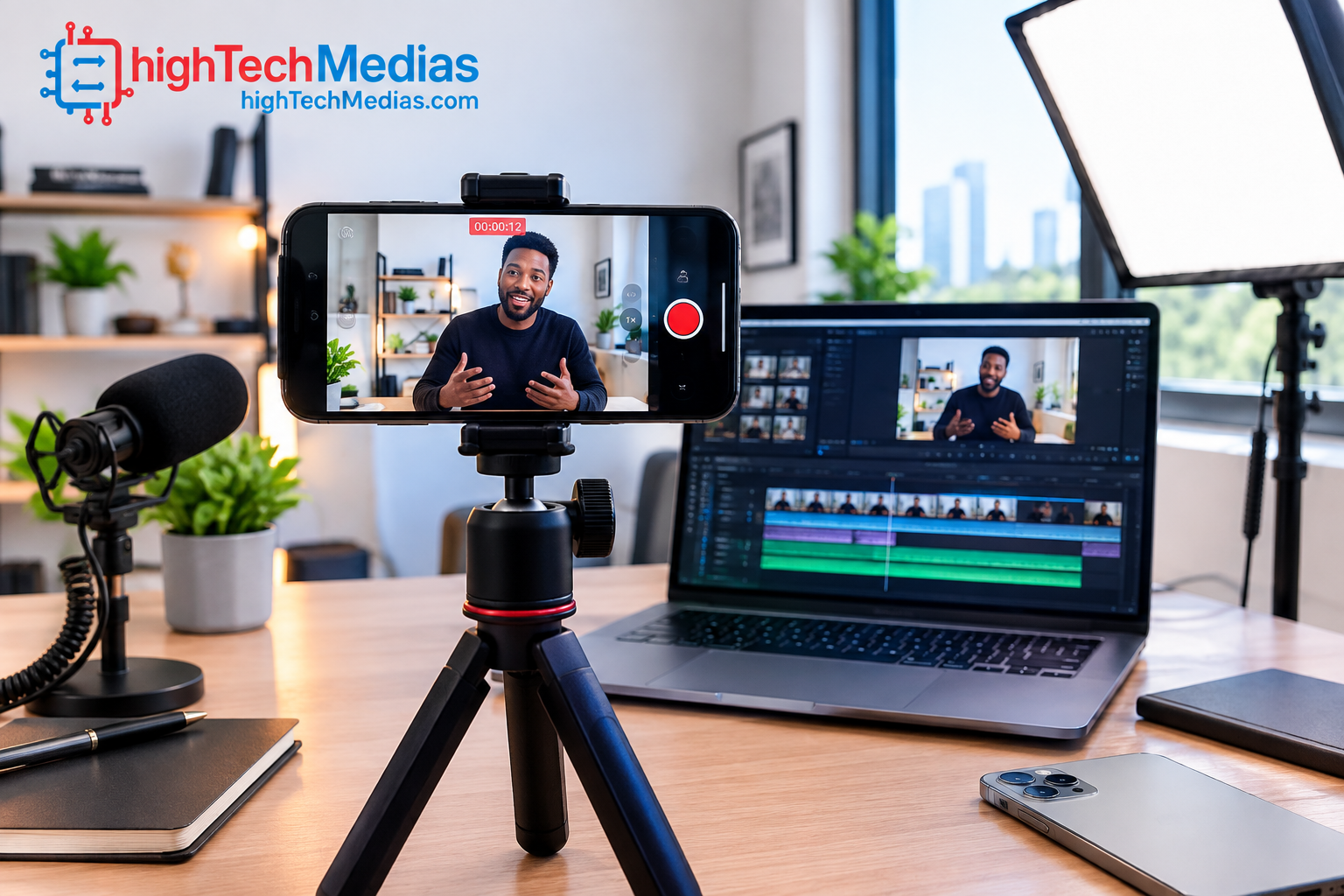
The iPhone 18 Pro Max supports 4K Dolby Vision recording up to 120 fps on the Fusion Main camera, ProRes up to 4K at 120 fps with external recording, ProRes RAW, Apple Log 2, genlock, Cinematic mode, Audio Mix, and advanced stabilization.
These capabilities make the iPhone particularly interesting for creators who want to move beyond casual social-media clips.
The Galaxy S26 Ultra supports 8K video at 30 fps and 4K video at up to 120 fps in Pro Video mode. Samsung also promotes its advanced video capabilities, Nightography, and AI-assisted video features.
The choice depends heavily on workflow.
A YouTube creator who edits primarily on a computer may care about professional codecs, Log recording, external recording, and color grading.
A social-media creator who wants quick recording, editing, and publishing may care more about ease of use, stabilization, autofocus, and integrated editing tools.
For video professionals, the iPhone 18 Pro Max offers a particularly extensive set of documented professional video formats and controls.
For Android users who want high-resolution video, extensive camera hardware, and a flexible zoom system, the Galaxy S26 Ultra remains a powerful option.
9. Camera Software, RAW Photography and Editing
Modern smartphone photography is increasingly dependent on software.
The camera captures the light, but the phone’s image-processing system determines much of what users eventually see.
This includes:
- HDR processing;
- noise reduction;
- sharpening;
- exposure blending;
- skin-tone processing;
- color rendering;
- portrait segmentation;
- computational zoom;
- night processing.
The iPhone 18 Pro Max supports ProRAW and Apple’s Reference Image feature. Apple says Reference Image can create a signed reference image from sensor data, allowing users to compare it with the edited image and verify what the sensor captured.
Samsung’s Galaxy S26 Ultra uses the ProVisual Engine and includes Photo Assist and other Galaxy AI photography tools. Samsung states that some enhanced AI editing features may involve resizing and visible AI watermarks.
For everyday users, this means software can make the camera feel significantly more capable than the hardware specification sheet suggests.
For photographers, however, it also means that “natural-looking” results can depend on how much computational processing is applied.
10. A Fair Camera Comparison: What You Should Actually Test
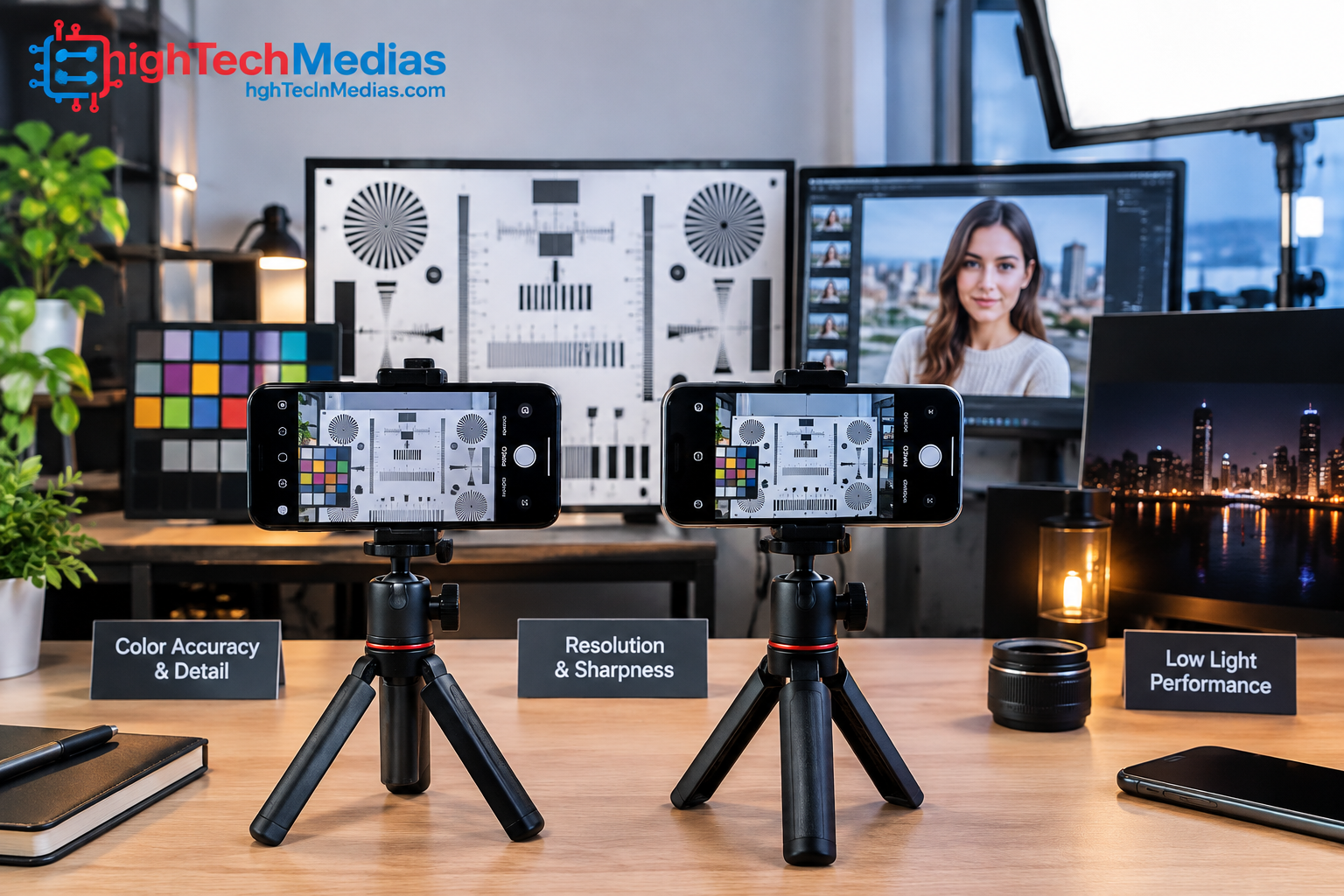
If you have access to both phones, a fair camera comparison should use the same conditions.
Use:
Test 1 — Daylight
Photograph the same building, person, and landscape.
Check:
- detail;
- color;
- sky exposure;
- shadows;
- edge detail.
Test 2 — Indoor
Photograph people under ordinary indoor lighting.
Check:
- skin tones;
- autofocus;
- motion blur;
- white balance;
- noise.
Test 3 — Low light
Use a street scene or indoor environment with limited lighting.
Check:
- noise;
- highlight control;
- shadow detail;
- color;
- motion.
Test 4 — Ultra-wide
Photograph architecture or a landscape.
Check:
- edge distortion;
- corner detail;
- color consistency;
- exposure.
Test 5 — 3x–5x zoom
Photograph the same distant subject.
Check:
- fine detail;
- stabilization;
- focus;
- text;
- texture.
Test 6 — Long zoom
Test higher zoom levels, but clearly separate optical, optical-quality, and digital zoom.
Test 7 — Portrait
Photograph the same person using portrait mode.
Check:
- skin tones;
- hair separation;
- background blur;
- facial detail.
Test 8 — Video
Record the same moving scene with both phones.
Check:
- stabilization;
- autofocus;
- exposure changes;
- audio;
- dynamic range;
- detail.
This is the methodology that turns a basic camera comparison into a meaningful smartphone camera test.
11. Price and Value: What Are You Actually Paying For?
At this price level, the camera system is only part of the purchase.
The iPhone 18 Pro Max starts at $1,299 in the United States with 256GB of storage. Apple offers 512GB, 1TB, and 2TB configurations as well.
Samsung lists the Galaxy S26 Ultra at $1,299.99 for 256GB, $1,499.99 for 512GB, and $1,799.99 for 1TB on its U.S. store. At the time of this article’s research, Samsung was showing a $200 discount on the 256GB model, bringing it to $1,099.99.
Because smartphone promotions change frequently, these prices should be treated as current U.S. prices at the time of publication, not permanent prices.
Trade-in offers can also change the effective cost significantly, but trade-in values depend on the device, condition, carrier, and promotion.
12. Which Phone Is Better for Different Types of Photographers?
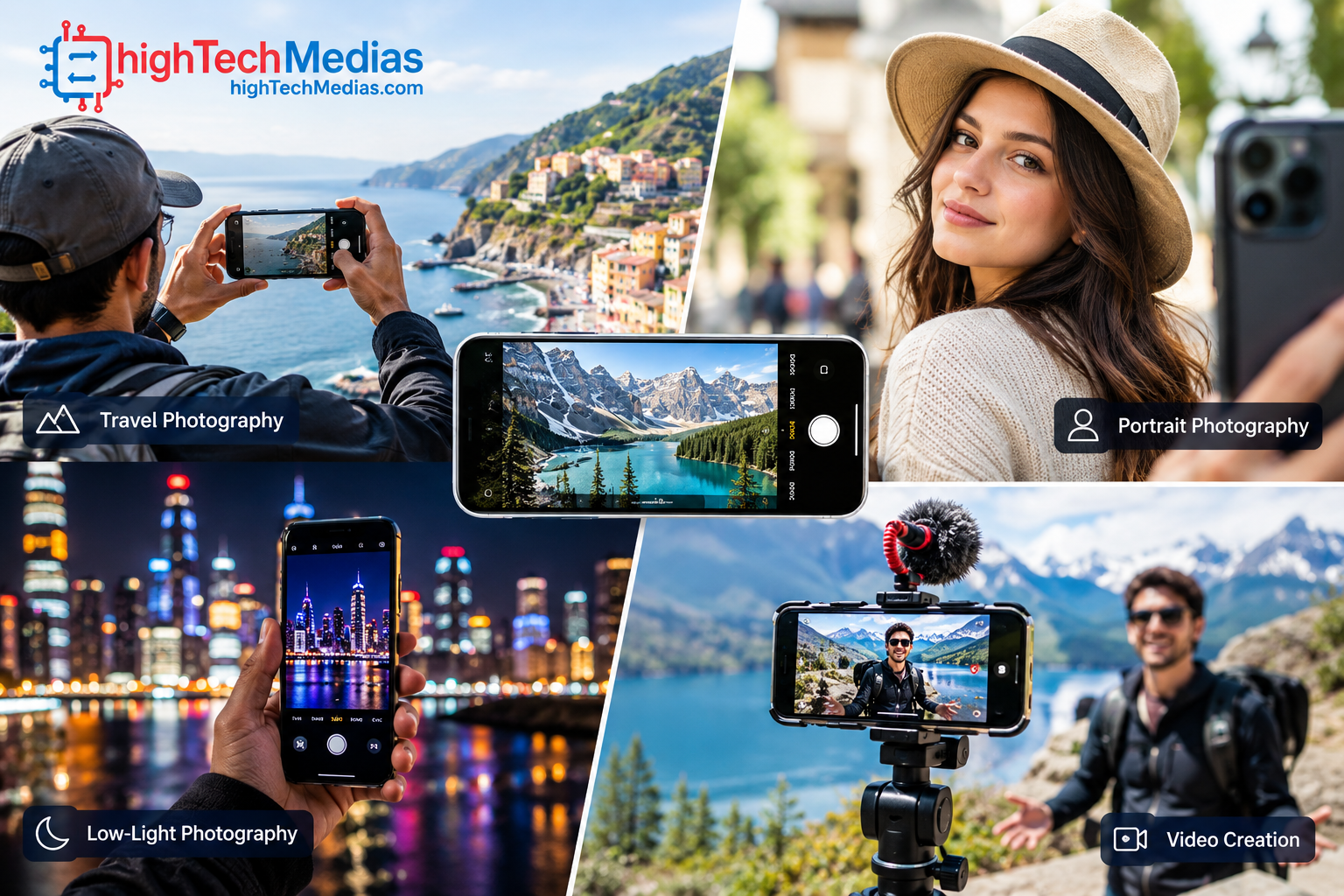
For everyday photography
Both phones are designed to make high-quality photography accessible without requiring manual controls.
The better choice depends largely on ecosystem preference and shooting style.
For travel photography
The Galaxy S26 Ultra has a strong hardware advantage in terms of dedicated telephoto options, with separate 3x and 5x cameras.
The iPhone 18 Pro Max provides substantial telephoto reach while maintaining 48MP rear-camera hardware across its camera system.
For professional video
The iPhone 18 Pro Max offers an unusually extensive professional video toolset, including ProRes RAW, Apple Log 2 and genlock.
For long-distance photography
The Galaxy S26 Ultra’s dedicated 3x and 5x telephoto cameras and 100x digital zoom give it an extensive zoom system on paper.
For photographers who want manual control
Both provide advanced controls, but Apple’s iPhone 18 Pro models specifically add controls for aperture, shutter speed, white balance, and histogram viewing.
For Android users
The Galaxy S26 Ultra is the natural choice because it combines Samsung’s camera hardware, Android software, Galaxy AI, and Samsung’s broader ecosystem.
For Apple users
The iPhone 18 Pro Max integrates naturally with Apple’s ecosystem and provides extensive photo and video tools.
13. iPhone 18 Pro Max vs. Galaxy S26 Ultra Camera Comparison
| Camera Feature | iPhone 18 Pro Max | Galaxy S26 Ultra |
|---|---|---|
| Main camera | 48MP Fusion Main | 200MP Wide |
| Main aperture | Variable ƒ/1.48–ƒ/4.0 | ƒ/1.4 |
| Ultra-wide | 48MP | 50MP |
| Telephoto | 48MP | 50MP + 10MP |
| Optical telephoto | 4x / 8x optical-quality | 3x / 5x optical |
| Digital zoom | Up to 40x | Up to 100x |
| Front camera | 18MP Center Stage | 12MP |
| RAW | ProRAW | Pro/RAW capabilities |
| Professional video | ProRes RAW, Apple Log 2, genlock | Pro Video, 8K |
| Macro | 48MP macro | Supported through camera system |
| Stabilization | Sensor-shift and 3D sensor-shift systems | OIS and Samsung stabilization systems |
| Starting U.S. price | $1,299 | $1,299.99 list price |
Specifications are based on the manufacturers’ official documentation.
14. Frequently Asked Questions
Which phone has the best smartphone camera?
There is no single answer for every photographer. The iPhone 18 Pro Max emphasizes high-resolution cameras, variable aperture, professional video formats, and advanced manual controls, while the Galaxy S26 Ultra emphasizes a 200MP Main camera and multiple dedicated telephoto cameras.
Is the 200MP Galaxy camera better than the iPhone’s 48MP camera?
Not automatically. Megapixel count is only one factor in phone camera quality. Sensor design, optics, aperture, stabilization, processing, exposure, and shooting conditions also affect the final image.
Which is the best camera phone 2026 for zoom?
The Galaxy S26 Ultra offers more extensive dedicated telephoto hardware, including 3x and 5x optical zoom and up to 100x digital zoom.
Which phone is better for video creators?
The iPhone 18 Pro Max has an especially extensive professional video feature set, including ProRes RAW, Apple Log 2, genlock, and 4K Dolby Vision recording.
Does the Galaxy S26 Ultra really have 100x optical zoom?
No. Samsung specifies 3x and 5x optical zoom, 2x and 10x optical-quality zoom, and up to 100x digital zoom.
What matters most in smartphone photography?
The camera sensor, lens quality, aperture, stabilization, image processing, autofocus, dynamic range, color reproduction, and shooting conditions all matter. Megapixel count alone is not enough.
15. Final Verdict
The iPhone 18 Pro Max and Samsung Galaxy S26 Ultra take different approaches to flagship smartphone photography.
The Galaxy S26 Ultra is built around a highly versatile multi-camera system. Its 200MP Main camera, 50MP ultra-wide, dedicated 3x telephoto, dedicated 5x telephoto, and extensive zoom system make it particularly attractive to photographers who regularly switch focal lengths or photograph distant subjects.
The iPhone 18 Pro Max takes a different approach. Its three 48MP rear cameras, variable-aperture Main camera, 8x optical-quality telephoto capability, ProRAW, ProRes RAW, Apple Log 2, and extensive professional video controls make it particularly compelling for photographers and creators who want a combination of still photography and advanced video production.
So which one should you buy?
If zoom flexibility and dedicated telephoto hardware are your biggest priorities, the Galaxy S26 Ultra’s camera configuration deserves serious consideration.
If professional video, manual camera controls, RAW workflows, and an integrated photo/video production system are more important, the iPhone 18 Pro Max offers a particularly comprehensive toolset.
For everyday users, either phone provides a flagship-level camera system. The more important question is not which specification sheet looks more impressive, but which camera system fits the way you actually photograph.
That is the key lesson from this smartphone camera test: the best camera phone is not necessarily the one with the highest megapixel number. It is the phone whose combination of hardware, optics, image processing, controls, zoom, stabilization, and video tools best matches your photography needs.

Comment (1)
[…] For more demanding photography, compare smart glasses with the dedicated cameras and imaging systems discussed in our smartphone camera comparison. […]