
iPhone vs Android – Which One Should You Buy in 2026?
Choosing a smartphone in 2026 is no longer simply a question of which phone has the fastest processor or the highest camera megapixel count. The real decision involves the operating system, camera system, battery endurance, software support, AI features, accessories, connected devices, and the way a phone fits into your daily life.
The iPhone vs Android debate is therefore more complicated than it was several years ago. Apple has continued developing its iPhone hardware and iOS experience, while Android manufacturers continue to offer a much wider selection of phones, designs, camera configurations, displays, and software features.
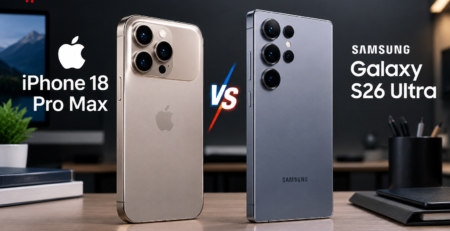
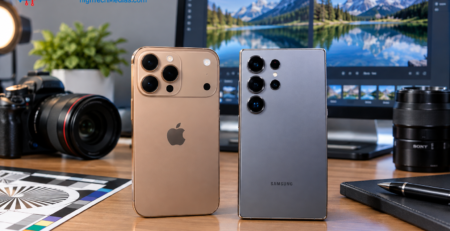
For buyers considering a premium device, two current examples make the comparison especially interesting: the iPhone 18 Pro Max and Samsung Galaxy S26 Ultra. Both are flagship smartphones with advanced cameras, large displays, modern AI features, and premium hardware, but they approach the smartphone experience differently. Apple lists the iPhone 18 Pro Max from $1,299 in the U.S., while Samsung lists the Galaxy S26 Ultra from $1,299.99 before current promotions.
The goal of this guide is not to tell every reader that one platform is universally better. Instead, it breaks down the important differences so you can decide which platform fits your priorities.
1. Two Flagship Models to Consider in 2026
Before comparing the two platforms generally, it makes sense to look at two real flagship phones currently available in the U.S. market.
1.1 Apple iPhone 18 Pro Max
Apple’s iPhone 18 Pro Max starts at $1,299 in the United States for 256GB according to Apple’s September 2026 announcement. It is also offered in 512GB, 1TB, and 2TB capacities. Apple lists black, silver, glacier, and burgundy finishes.
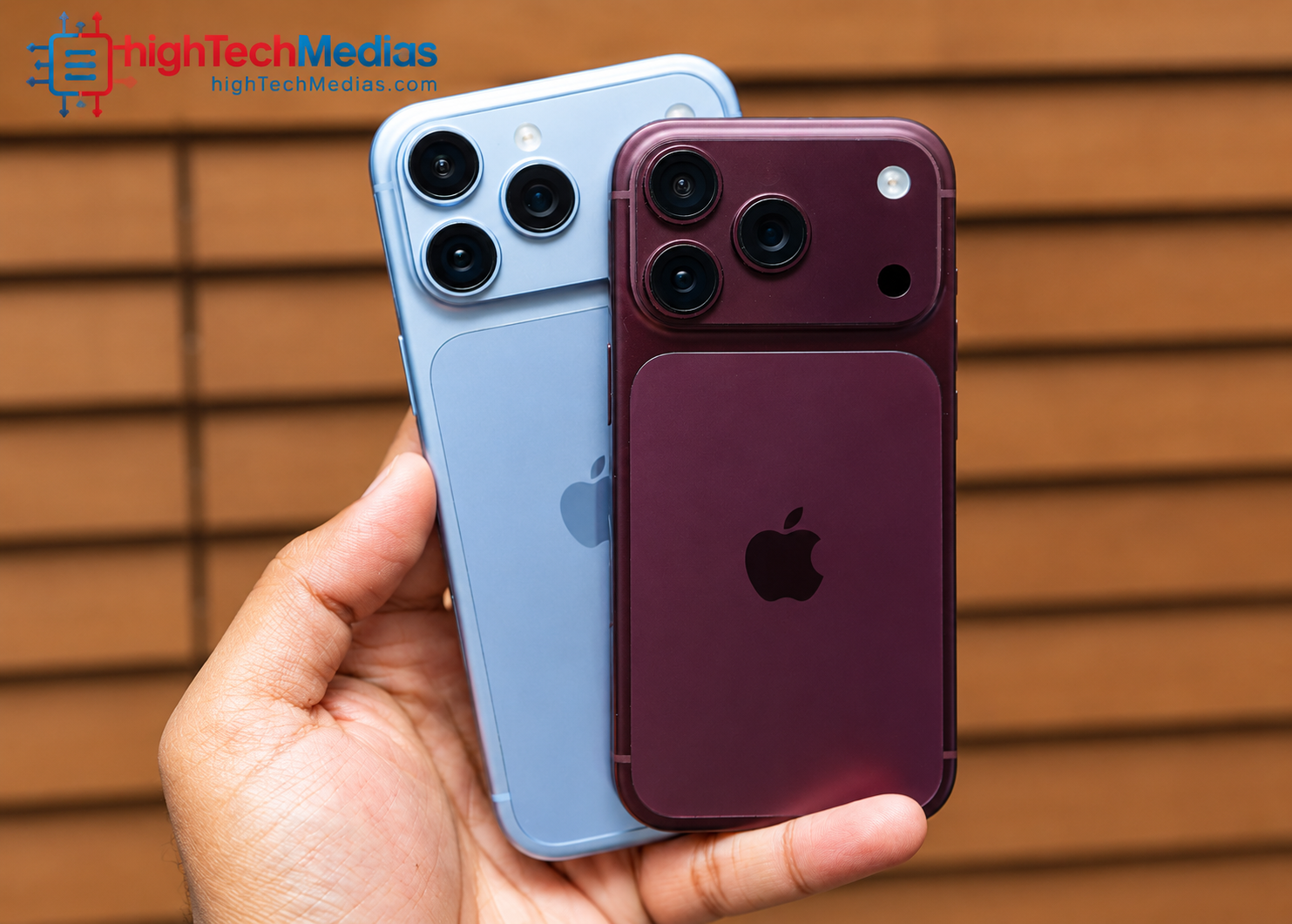
The phone has a 6.9-inch Super Retina XDR OLED display, 120Hz ProMotion, an A20 Pro chip, Wi-Fi 7, USB-C, and iOS 27. Its camera system includes 48MP Fusion Main, 48MP Fusion Ultra Wide, and 48MP Fusion Telephoto cameras. Apple also introduced variable aperture on the main camera and expanded manual camera controls.
Key specifications
Feature |
iPhone 18 Pro Max |
|---|---|
| Starting U.S. price | $1,299 |
| Storage | 256GB, 512GB, 1TB, 2TB |
| Display | 6.9-inch Super Retina XDR OLED |
| Refresh rate | Up to 120Hz ProMotion |
| Processor | A20 Pro |
| Main camera | 48MP Fusion Main, variable aperture |
| Ultra-wide | 48MP Fusion Ultra Wide |
| Telephoto | 48MP Fusion Telephoto |
| Video | Up to 4K Dolby Vision 120fps on Fusion Main |
| Front camera | 18MP Center Stage |
| Operating system | iOS 27 |
| Connectivity | 5G, Wi-Fi 7, Bluetooth 6 |
| Connector | USB-C |
| Weight | 249g |
Apple’s official specifications list up to 30 hours of typical use, up to 45 hours of video playback, and fast charging of up to 50% in around 15 minutes under Apple’s specified charging conditions.
Who should buy the iPhone 18 Pro Max?
The iPhone 18 Pro Max makes particular sense for buyers who:
- already use a Mac, iPad or Apple Watch;
- prioritize high-end mobile photography and video;
- want a very large display;
- need substantial storage for photos and video;
- use iMessage, FaceTime, AirDrop and other Apple services heavily;
- want Apple’s current Pro iPhone hardware;
- are interested in Apple’s latest on-device AI and Siri features.
Why consider it?
The iPhone 18 Pro Max combines a large display, A20 Pro processing, a sophisticated camera system and extensive video capabilities. Apple specifically highlights variable aperture, manual camera controls, improved low-light photography and professional video tools.
Pros
- Large 6.9-inch OLED display
- A20 Pro processor
- 48MP multi-camera system
- Variable-aperture main camera
- Extensive professional video features
- Up to 2TB storage
- Wi-Fi 7 and USB-C
- Strong integration with Apple’s ecosystem
- iOS 27 and Apple Intelligence
Cons
- Starting price is high
- 249g weight makes it a substantial phone
- Apple’s ecosystem can be less flexible for users who prefer Android-style customization
- U.S. models use eSIM rather than a physical SIM card
- Many of its most useful ecosystem features make the most sense when other Apple devices are involved.
1.2 Samsung Galaxy S26 Ultra
Samsung’s Galaxy S26 Ultra is another current premium option. Samsung lists a U.S. starting price of $1,299.99 before trade-in, while its direct online store currently shows a promotional price of $1,099.99 for the 256GB unlocked version at the time of checking. Samsung also lists 512GB and 1TB versions. Because promotional pricing can change, readers should verify the current price before purchasing.
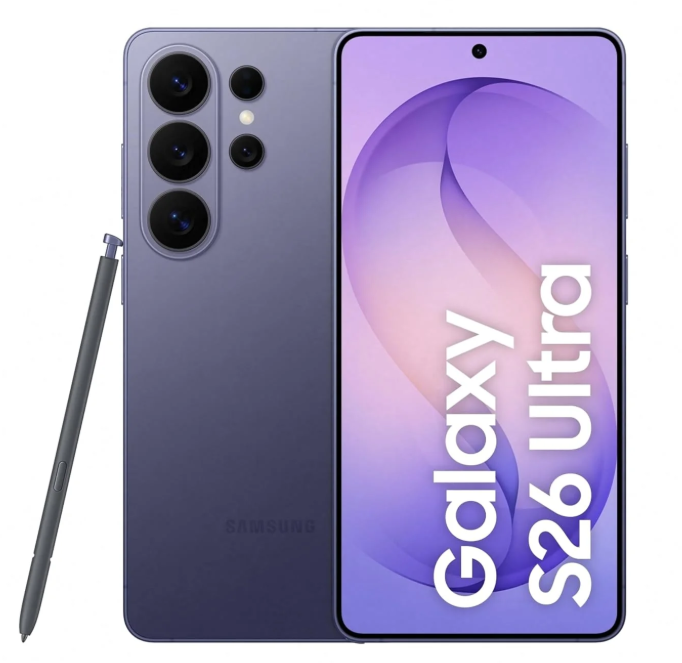
The Galaxy S26 Ultra has a 6.9-inch display, weighs 214g, uses a 5,000mAh battery, and features a 200MP wide camera, 50MP ultra-wide camera and 50MP telephoto camera according to Samsung’s U.S. specifications.
Key specifications
Feature |
Galaxy S26 Ultra |
|---|---|
| U.S. list price | $1,299.99 |
| Current Samsung promotional price checked | $1,099.99 for 256GB |
| Storage | 256GB, 512GB, 1TB |
| Display | 6.9 inches |
| Weight | 214g |
| Thickness | 7.9mm |
| Main camera | 200MP |
| Ultra-wide | 50MP |
| Telephoto | 50MP |
| Battery | 5,000mAh |
| Video playback | Up to 31 hours |
| Operating system | Android |
| Special feature | Built-in Privacy Display |
| S Pen | Built in |
Samsung highlights the Galaxy S26 Ultra’s built-in Privacy Display, 200MP wide camera, 50MP telephoto, improved NPU/GPU/CPU and 5,000mAh battery. Samsung also states that the phone can reach up to 75% charge in around 30 minutes under its specified conditions.
Who should buy the Galaxy S26 Ultra?
It is particularly suited to people who:
- want Android rather than iOS;
- value extensive customization;
- want a large display;
- frequently use a stylus;
- want Samsung DeX and broader productivity features;
- take advantage of Samsung’s AI tools;
- want extensive camera controls and telephoto capability;
- prefer the wider choice available within the Android ecosystem.
Why consider it?
Samsung has built the Ultra series around a combination of a large display, S Pen functionality, high-resolution cameras, AI features and productivity tools. The S26 Ultra also introduces a built-in Privacy Display, which Samsung says can selectively hide the screen from side viewing.
Pros
- 6.9-inch display
- 200MP main camera
- 50MP telephoto camera
- 5,000mAh battery
- Built-in S Pen
- Built-in Privacy Display
- Android customization
- Samsung DeX
- Up to 1TB storage
- Strong AI and productivity features
Cons
- Premium pricing
- Large physical size
- Samsung’s promotional pricing can change
- Some advanced features depend on Samsung’s ecosystem
- Android update timing can vary by device and manufacturer across the broader Android market.
2. The Real Difference Between iPhone and Android
The biggest difference between the two platforms is not a single hardware specification. It is the philosophy behind the mobile operating system.
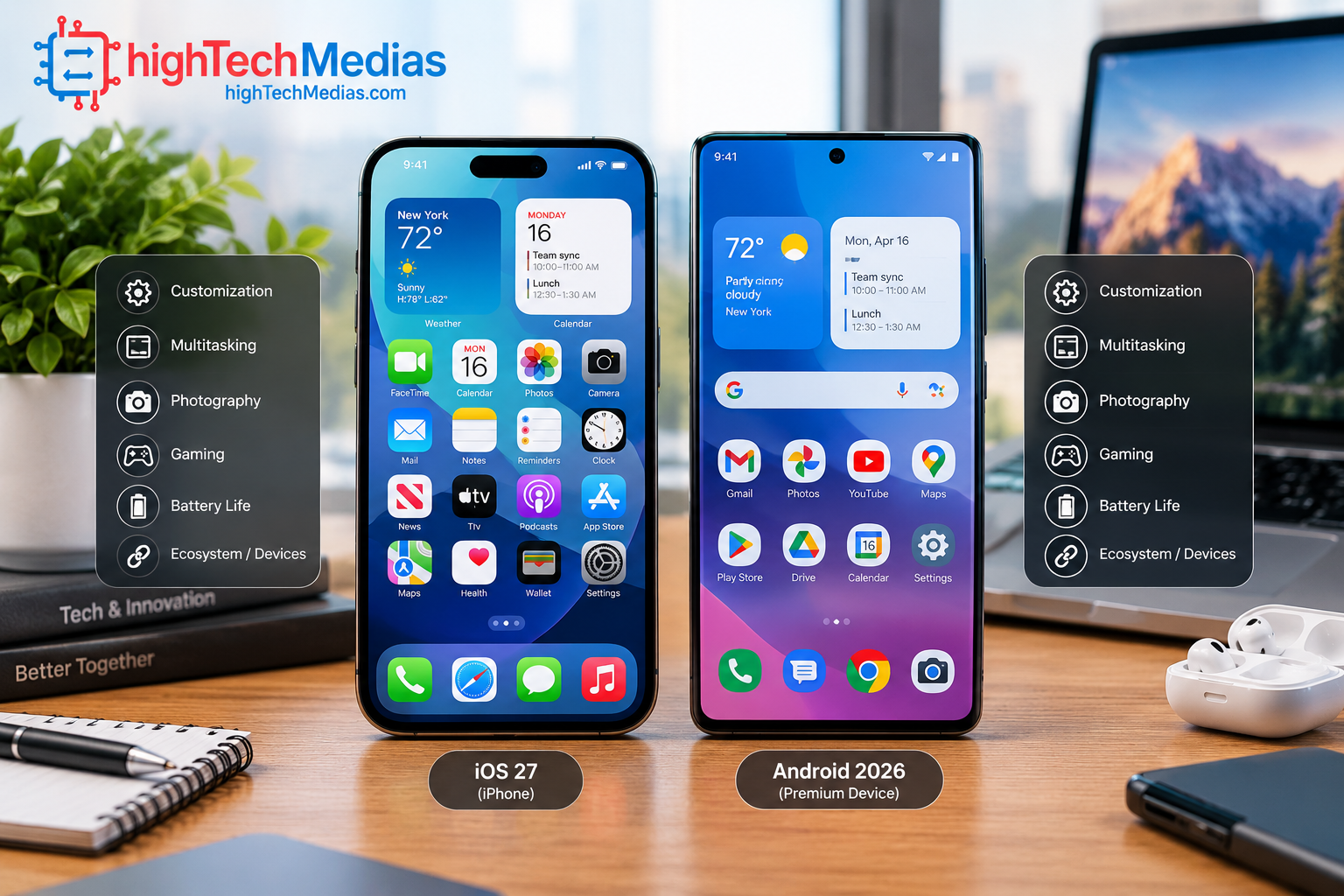
Apple controls the iPhone hardware, iOS software, major system services and much of the accessory ecosystem. That gives the company a tightly integrated environment.
Android works differently. Google develops Android, while companies such as Samsung, Google, OnePlus, Motorola and others build their own hardware and software experiences around the platform.
That creates more variety.
Google describes Android’s ecosystem as offering a combination of device choice and a shared operating system experience. Android 16 added features including improved notifications, security tools, multitasking and desktop-style windowing for compatible large-screen devices.
This means the right choice depends heavily on how much you value consistency versus hardware and software variety.
3. iOS vs Android: Software and Updates
The iOS vs Android discussion starts with the operating system itself.
The iPhone 18 Pro Max runs iOS 27. Apple controls the hardware and software, which means new iOS features can be developed around a relatively defined range of devices. Apple’s current Pro models also integrate Apple Intelligence and Siri AI into the operating system.
Android 16 introduced features such as notification improvements, desktop windowing, enhanced accessibility and additional security controls. Google’s current Android ecosystem also includes Android 17-related features and a wide variety of device types.
The key point is that Android phones are not identical.
A Samsung Galaxy, Google Pixel and OnePlus phone may all use Android while providing different interfaces, camera apps, AI tools, update schedules and hardware features.
That gives Android buyers more choice but also means that buyers should check the exact manufacturer’s software-support policy for the phone they are considering.
4. Camera Quality and Mobile Photography
For many buyers, the camera may be more important than the operating system.
A useful smartphone camera comparison should not focus only on megapixels. Sensor size, lens design, image processing, stabilization, autofocus, dynamic range, telephoto capability and video tools all matter.
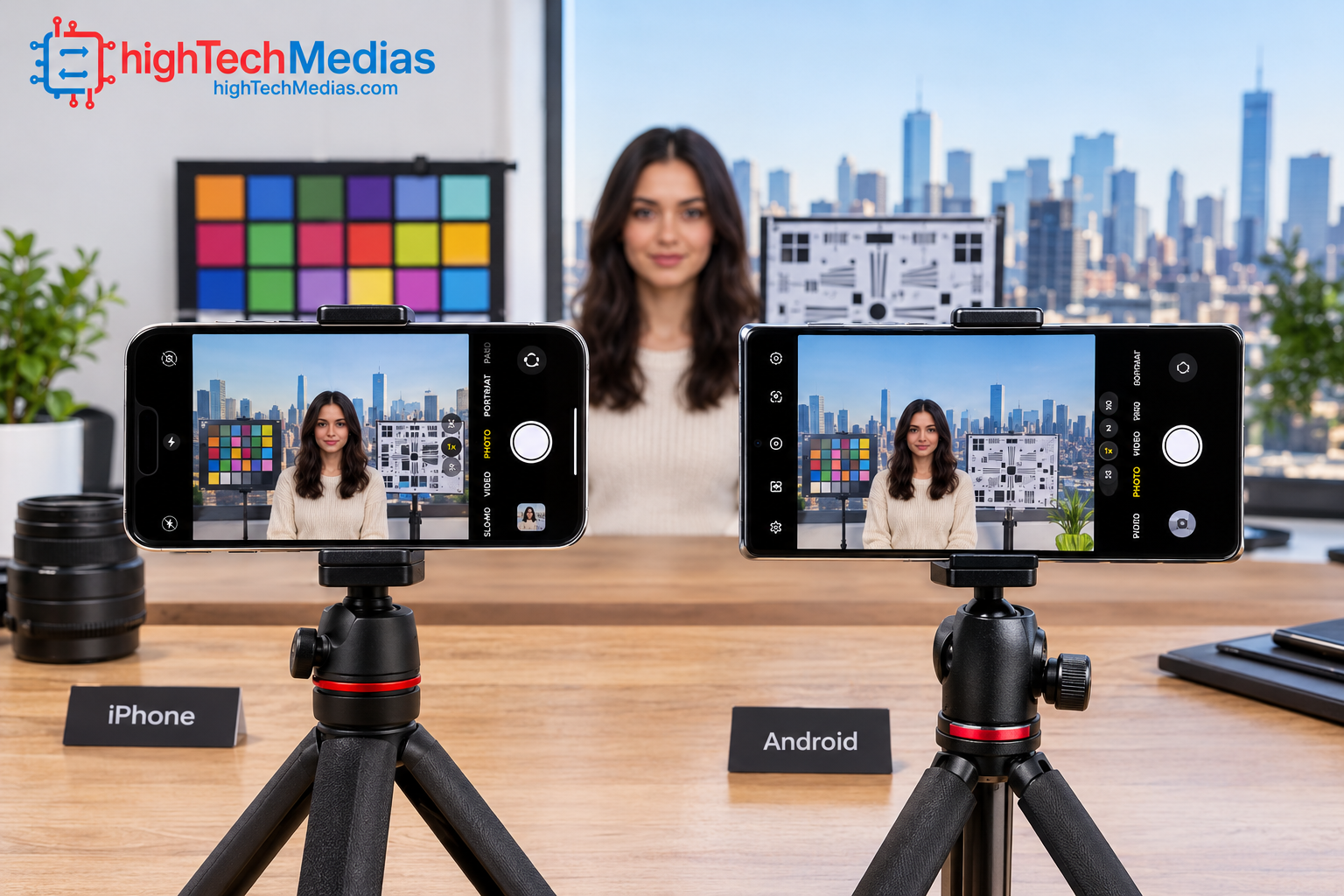
The iPhone 18 Pro Max uses a 48MP Fusion Main camera with variable aperture, a 48MP Fusion Ultra Wide and a 48MP Fusion Telephoto. Apple also provides manual controls for aperture, shutter speed, white balance and exposure evaluation through the histogram.
Samsung takes a different approach. The Galaxy S26 Ultra uses a 200MP main camera, 50MP ultra-wide camera and 50MP telephoto camera. Samsung also emphasizes its ProVisual Engine and low-light imaging capabilities.
The numbers alone do not tell you which camera will produce the image you prefer.
Travel photography
Travel users should consider the entire camera system rather than just the main sensor. Ultra-wide photography is useful for architecture and landscapes, while telephoto cameras can help capture distant subjects without physically moving closer.
Portrait photography
Portrait quality depends on more than camera resolution. Lens selection, depth processing, skin-tone rendering, autofocus and computational photography all contribute.
Low-light photography
Night photography is another area where hardware and computational processing work together. A larger aperture can help capture more light, but software processing also has a major influence on the final image.
Video creation
The iPhone 18 Pro Max has extensive video options, including 4K Dolby Vision recording and professional formats such as ProRes and ProRes RAW.
Samsung also emphasizes low-light video recording and stabilization on the Galaxy S26 Ultra.
For creators, the best choice may depend on the editing applications they already use, their preferred workflow and whether they need specific recording formats.
5. Battery Life, Charging and Everyday Endurance
Battery performance is another area where specifications can be misleading.
A larger battery does not automatically mean longer real-world battery life. Screen size, processor efficiency, modem behavior, software optimization, camera use, gaming and cellular reception all affect endurance.
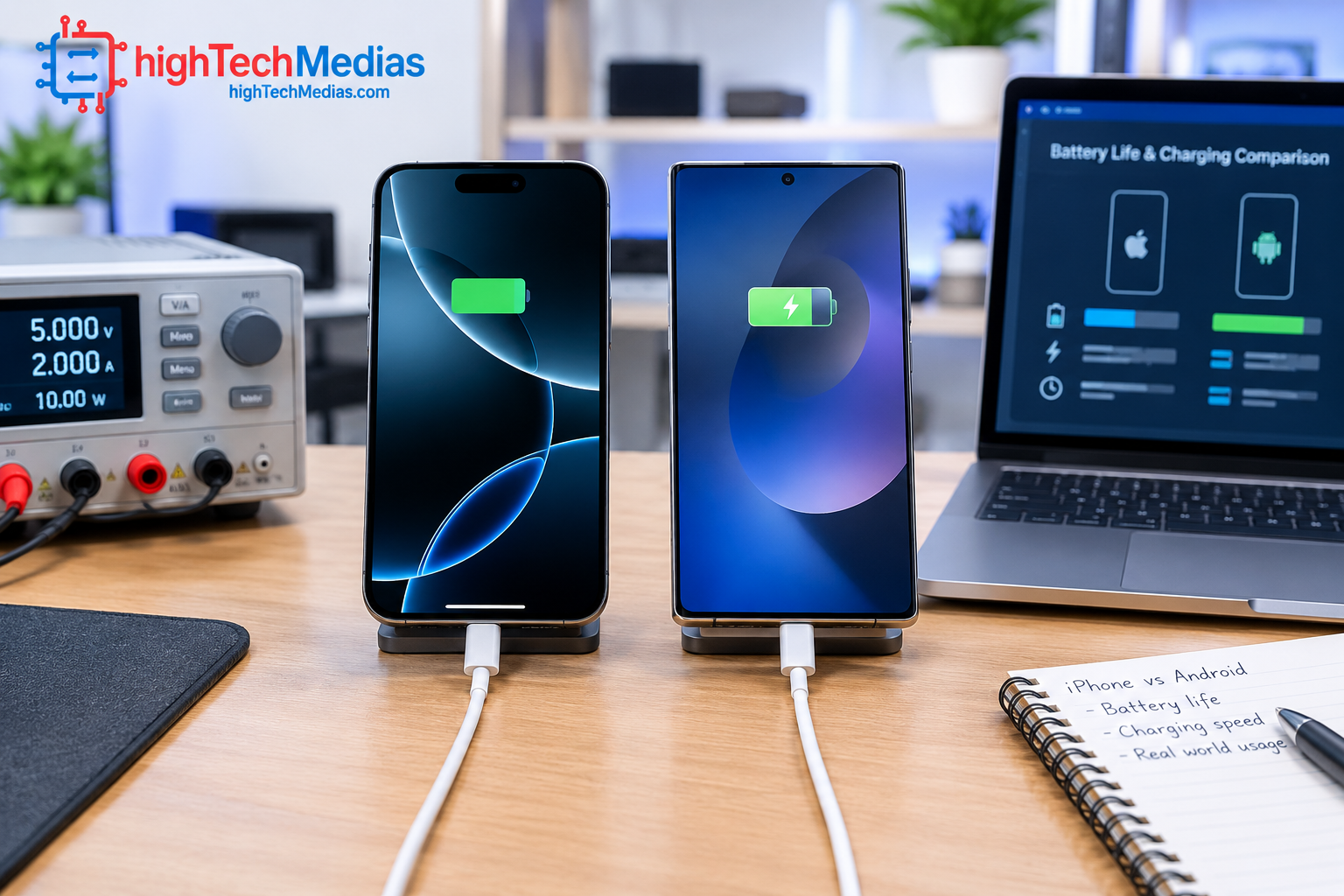
The iPhone 18 Pro Max is officially rated by Apple for up to 30 hours of typical use and up to 45 hours of video playback. Apple also specifies fast charging of up to 50% in around 15 minutes under certain charging conditions.
Samsung lists a 5,000mAh battery and up to 31 hours of video playback for the Galaxy S26 Ultra, with charging of up to 75% in around 30 minutes under its specified conditions.
Those figures should not be interpreted as a universal real-world battery test because manufacturers use controlled testing methods.
For consumers, the more useful question is how the phone behaves during their own workload.
Someone who spends hours recording video, using GPS, playing games or working from a cellular connection will use considerably more energy than someone who mainly sends messages and checks email.
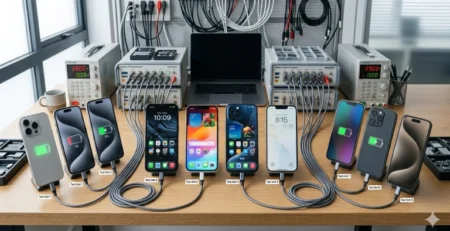
For a broader discussion of smartphone endurance, see our battery drain test: which smartphone lasts longest in 2026.
8. Ecosystem: iPhone, Android and Your Other Devices
The smartphone is no longer an isolated device.
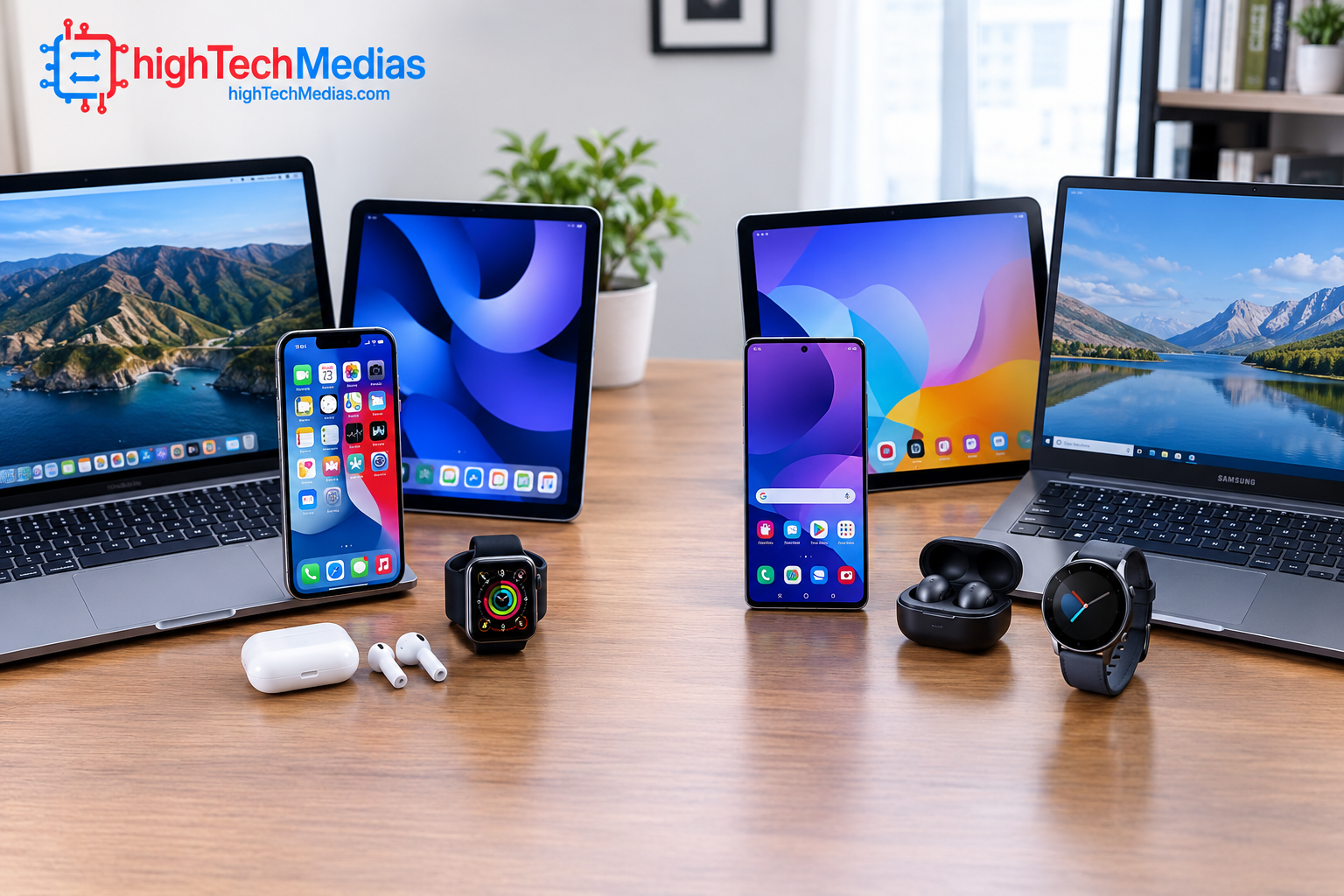
For many U.S. buyers, the ecosystem can matter more than a small difference in camera specifications.
An iPhone becomes particularly useful when paired with devices such as a Mac, iPad or Apple Watch. Features such as AirDrop, FaceTime, iCloud and cross-device workflows can reduce friction between devices.
Android offers a broader ecosystem because multiple manufacturers participate in it. Samsung has its own Galaxy ecosystem, Google has Pixel and Android services, and other manufacturers provide additional hardware and software combinations.
This is where the smartphone ecosystem becomes an important purchasing consideration.
If most of your household already uses Apple products, staying within Apple’s ecosystem may reduce friction.
If your household uses a mixture of Windows PCs, Android tablets, Chromebooks and Android phones, Android can provide greater manufacturer choice.
There is no universal rule. The best ecosystem is the one that fits the devices and services you already use.
9. Privacy, Security and Long-Term Ownership
Privacy and security should also be part of the buying decision.
Apple emphasizes privacy controls, encrypted services such as iMessage and FaceTime, and permission controls for app tracking.
Android also includes security and privacy controls. Android 16 introduced or expanded features such as Advanced Protection and Identity Check, although availability can vary by device and manufacturer.
For long-term ownership, buyers should also examine:
- how long the exact phone receives software updates;
- how quickly updates arrive;
- battery replacement options;
- repair availability;
- accessory availability;
- trade-in programs;
- storage capacity;
- cloud-storage requirements.
This is particularly important when buying a premium smartphone that you intend to keep for several years.
10. Pricing and Value in 2026
The price comparison between flagship phones is more complicated than looking at the starting MSRP.
The iPhone 18 Pro Max starts at $1,299 for 256GB according to Apple. Its higher-capacity configurations can reach $2,399 for 2TB.
Samsung lists the Galaxy S26 Ultra from $1,299.99, but Samsung’s U.S. store currently shows a 256GB unlocked configuration at $1,099.99 after a $200 instant discount. The same page lists 512GB at $1,299.99 and 1TB at $1,599.99 in the promotion checked.
Because smartphone promotions change frequently, readers should check the manufacturer’s store immediately before purchasing.
Trade-in offers can also substantially change the effective purchase price.
Apple currently advertises trade-in credit and carrier offers for eligible devices, while Samsung also offers trade-in programs.
Therefore, the advertised starting price is only one part of the value equation.
11. Which Platform Fits Different Types of Buyers?
Students
Students should consider price, battery endurance, camera quality, software support and compatibility with their existing computer.
Someone already using a MacBook or iPad may benefit from the iPhone ecosystem. A student using Windows hardware and looking for greater phone variety may prefer Android.
Professionals
Professionals should consider email, productivity applications, video calls, document handling, cloud services and cross-device workflows.
Samsung’s larger-screen productivity tools and DeX can be particularly relevant to users who want desktop-style workflows from a mobile device.
Content creators
Creators should pay close attention to camera controls, video formats, microphones, stabilization, storage and editing software.
The iPhone 18 Pro Max offers extensive video recording options including ProRes and ProRes RAW, while the Galaxy S26 Ultra emphasizes high-resolution photography, Nightography and Samsung’s AI-powered creative tools.
Gamers
Gamers should compare actual game availability, sustained performance, thermal management, display quality and battery endurance rather than choosing based solely on processor branding.
Families
Families should consider ecosystem compatibility, parental controls, account management, device sharing and existing devices.
Android and iOS both provide extensive family-oriented features, but the exact experience depends on the devices and services being used.
12. Should You Buy an iPhone or Android Phone in 2026?
The answer depends on what you actually need from your phone.
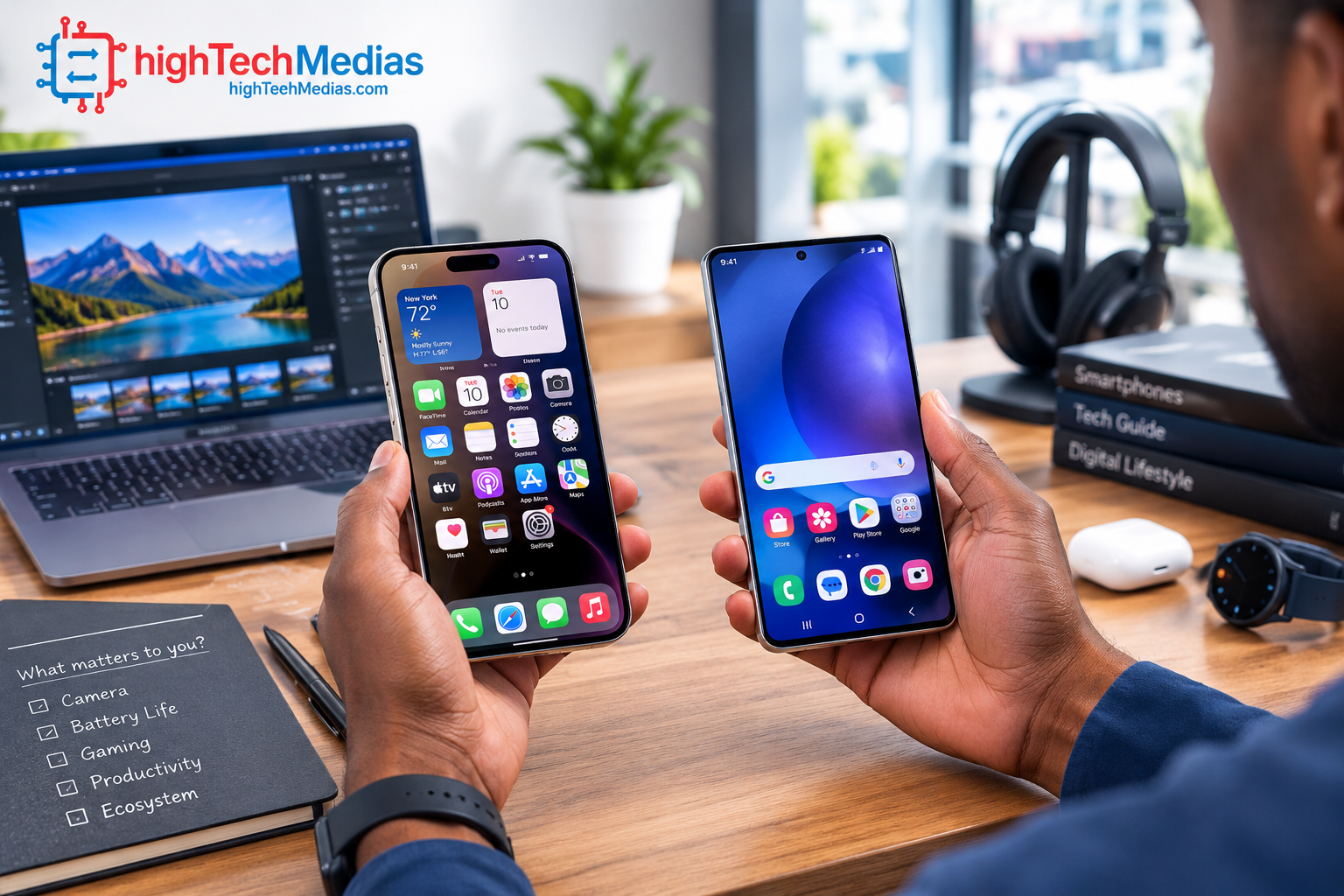
Choose an iPhone when you place strong value on Apple’s ecosystem, iOS, professional video features, Apple services and a tightly integrated hardware-and-software experience.
Consider Android when you want greater hardware variety, customization, broader manufacturer choice, advanced multitasking options or features such as Samsung’s S Pen and DeX.
For buyers comparing the iPhone 18 Pro Max and Galaxy S26 Ultra specifically, both offer premium displays, advanced cameras, high-end processors, large batteries and modern AI capabilities. The difference is less about whether one is capable and more about which experience fits your existing devices, preferred software and daily habits.
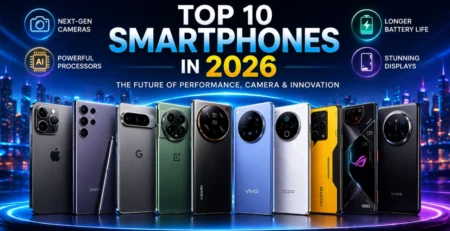
Our broader top 10 smartphones in 2026 guide can also help readers compare additional models rather than limiting the decision to Apple’s and Samsung’s flagship phones.
13. Frequently Asked Questions
1. Is iPhone or Android better in 2026?
There is no single answer for every buyer. The iPhone vs Android 2026 decision depends on ecosystem, software preferences, camera requirements, customization, price and the other devices you already own.
2. Is iPhone 18 Pro Max worth considering?
The iPhone 18 Pro Max offers Apple’s current Pro hardware, a 6.9-inch OLED display, A20 Pro, advanced 48MP camera systems, extensive video features and iOS 27. Its $1,299 starting price also places it firmly in the premium segment.
3. Is Samsung Galaxy S26 Ultra worth considering?
The Galaxy S26 Ultra combines a 6.9-inch display, 200MP main camera, 50MP telephoto, 5,000mAh battery, S Pen and Samsung’s latest AI and privacy features. Samsung’s current promotional pricing can also differ from its $1,299.99 list price.
4. Which has better smartphone camera performance?
Camera performance depends on the specific phone and the type of photography. Both current flagship models have sophisticated multi-camera systems and advanced computational photography. Buyers should compare real photographs, video capabilities and their preferred shooting style rather than relying only on megapixel numbers.
5. Which platform has more customization?
Android generally offers more customization and a broader range of device designs. iOS has added more customization over time but remains more tightly controlled by Apple.
6. Which is better for gaming?
Both platforms support demanding mobile games. The better choice depends on the specific games, device performance, thermal behavior, display and battery requirements.
7. Which platform should you choose?
Choose based on your ecosystem, software preferences, camera requirements, productivity needs and budget rather than choosing solely because one platform is more popular.
Final Verdict
The iPhone vs Android decision in 2026 is fundamentally about choosing between two different approaches to smartphones.
The iPhone 18 Pro Max represents Apple’s tightly integrated hardware, software and services model. It combines A20 Pro performance, iOS 27, advanced cameras, professional video capabilities and Apple’s broader ecosystem.
The Galaxy S26 Ultra represents Samsung’s Android approach, combining extensive hardware capabilities, a 200MP camera, S Pen functionality, large display, customization, AI features and Samsung-specific productivity tools.
For someone already deeply invested in Apple devices, the iPhone’s ecosystem may be a major consideration. For someone who values customization, hardware choice, Samsung productivity features or the broader Android ecosystem, an Android flagship may fit better.
The most important lesson is simple:
Don’t choose a smartphone only by looking at specifications on a product page. Choose the platform, hardware and ecosystem that match how you actually use your phone.

Comment (1)
[…] iPhone vs. Android comparison can help readers evaluate the broader smartphone ecosystem they intend to use with connected […]